Hey there, if you’ve ever worked in power plants, refineries, or even big industrial boiler setups, you’ve probably heard folks throw around the term “air preheater” a lot. And if you’ve stuck around that space long enough, you’ve definitely heard about the seals that keep these bad boys running smoothly. But what exactly is a Teflon air preheater seal? Let me break this down like I would for a technician who’s just pulled their hair out dealing with leaky seals at 2 a.m. Air Preheater Seal
First, let’s hit the basics real quick so we’re all on the same page. An air preheater (APH) is this huge, metal heat exchanger in industrial systems that’s basically a energy-saver MVP. Its whole job is to grab the hot exhaust gases that get wasted out of the boiler or turbine, and use that heat to warm up the cold combustion air going into the system. Without an APH, you’d be dumping massive amounts of heat straight into the atmosphere, wasting fuel like crazy and cranking up your operating costs. Makes sense why everyone obsesses over keeping them efficient, right?
Now, the problem with APHs—especially the regenerative type, which are the most common ones (think those big rotating drums full of heat-absorbing metal plates spinning between cold air and hot exhaust streams)—is that there’s always gaps where the moving parts meet the stationary parts. Those gaps are necessary to let the drum spin and keep it from rubbing itself apart, but they’re also huge for leaks. Hot exhaust can seep straight into the cold air side, or cold air can escape before it gets heated. Either way? You lose efficiency, burn more fuel, and end up with higher emissions. That’s where seals come in—their whole gig is bridging those gaps to stop leaks without stopping the drum from turning.
Teflon air preheater seals are just the specific type of seal made with PTFE (polytetrafluoroethylene), the fancy brand name for Teflon. Wait, but hold on—why Teflon? Why not metal seals or rubber ones? Let’s get into that. Metal seals are tough, don’t melt easily, but they wear down super fast from all that constant rubbing on the rotating drum. Rubber seals? They’re soft, but they break down when exposed to the high temperatures in APHs (exhaust can get up to like 700°F, which will turn rubber to goo in no time). Teflon, on the other hand, checks all the right boxes for this job.
First, Teflon’s got a super low coefficient of friction—like, lower than almost any other solid material. That means when the seal is pressed lightly against the rotating drum, it slides smoothly, no squeaking, no extra friction weighing down the drum, and way less wear on both the seal and the drum surface. Less wear means longer lifespan, fewer shutdowns to replace seals, which is huge for industrial plants where downtime costs tens of thousands of dollars an hour.
Second, Teflon handles temperature way better than rubber, and way better than most plastics used in seals. It can hold up from super cold (like the 50°F or so cold air going into the APH) all the way up to around 500°F—perfect, because the exhaust side of an APH doesn’t usually get much hotter than that, especially with modern emissions controls. It doesn’t melt, it doesn’t crack when it expands and contracts with temperature changes, and it doesn’t get brittle in the cold like other plastics.
Third, Teflon is non-stick. That’s the part no one talks about enough for APH seals. Exhaust gases have all kinds of gunk—ash, soot, unburned fuel particles, condensation. Those things love sticking to metal or rubber, building up over time and making seals stop working, or even gumming up the drum so it can’t spin. Teflon? Nothing sticks to it. So ash and soot slide right off, keeping the seal surface clean and working like it’s supposed to for way longer.
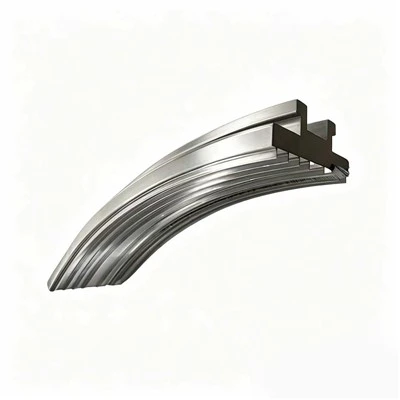
Wait, but let’s be real—Teflon seals aren’t one-size-fits-all. There are different types for different APH setups. There’s strip seals, which are the most common—thin strips of Teflon mounted on the stationary frame, pressed against the rotating drum. There’s also leaf seals, which are like little flexible Teflon leaves that wrap around the drum a bit, for smaller gaps or higher-pressure areas. And some guys use Teflon in combination with other materials, like a metal core covered in Teflon, to give extra rigidity for bigger APHs that have bigger gaps.
Now, let’s talk about why this matters for efficiency, because that’s the whole point of an APH. A typical APH with bad seals can have leakage rates of 15-20%—meaning 1 out of every 5 cubic feet of air/exhaust is leaking where it shouldn’t. With good Teflon seals, you can bring that leakage down to 5% or less. I’ve seen plants cut their fuel bills by 8-10% just by swapping out old, worn metal seals for Teflon ones. That’s not chump change—if your plant uses $100k a month in fuel, that’s $10k back in your pocket every month. And lower fuel use means lower CO2 emissions too, which is a win for regulatory compliance and ESG goals.
But wait, I know what you’re thinking—can’t I just get Teflon anywhere? Why pick a specific supplier like me? Let’s be honest, a lot of “Teflon seals” out there are cheaply made with recycled PTFE that’s full of impurities, or they’re cut too thin so they wear out in 6 months instead of 2-3 years. Or they’re not custom-sized for your specific APH model—every APH is a little different, and a seal that works on a A from one manufacturer won’t fit right on B from another.
I’ve been in the air preheater seal game for over a decade, so I’ve seen all the garbage that comes through. Our Teflon seals are virgin PTFE, not recycled—virgin material is way more consistent, more wear-resistant, and handles temperature changes way better. We custom-make every seal to your exact APH dimensions, no off-the-shelf one-size-fits-all junk. We also have options for modified Teflon, like glass-filled Teflon, for areas that need a little more rigidity, or carbon-filled Teflon for extra wear resistance in higher-speed APHs.
Another thing: installation matters, even for the best seals. If someone slaps a Teflon seal on too tight, that’ll wear it out fast. Too loose, and you get leaks. We don’t just sell you a seal and ghost you—we give installation guides tailored to your model, and even have techs on call to walk you through it if you’re not sure. I’ve had a plant manager call me at 7 a.m. panicking because their old metal seal broke during a shutdown, and we got them a custom Teflon seal made and shipped that same day so they didn’t have to delay startup. That’s the kind of service you won’t get from a big box industrial supply company.
Let’s also bust a myth: some people think Teflon seals are too expensive upfront. Yeah, they cost a little more than cheap rubber or metal seals, but when you calculate the cost of downtime, fuel savings, and how long they last—usually 2-4 years vs. 6 months for metal seals—they’re way cheaper in the long run. I had a customer last year who switched from metal seals that cost him $12k a year in replacements and fuel waste, to our Teflon seals that cost $8k total for the first two years. That’s $4k in his pocket, no extra work for replacing seals every six months.
Wait, and for older APHs that are already struggling with leaks? Teflon seals are a perfect retrofit. You don’t have to replace the whole APH, which is a million-dollar project. Just swap out the old seals for Teflon ones, and you can get 50-70% of your APH efficiency back. We’ve done that for refineries that had APHs that were so leaky they were barely working, and they came back up to near-new efficiency with a simple seal swap.
What about maintenance? Teflon seals are low-maintenance, which is another big plus. You don’t have to lubricate them like metal seals (wait, metal seals need lubrication to reduce friction, which adds extra work and can contaminate the air or exhaust). Teflon’s low friction means no lubrication needed, so less mess, less upkeep. You do need to check them occasionally for wear, but since they don’t stick to gunk, it’s easy to inspect them during a routine shutdown—no having to scrape layers of soot off the seal every time you check.
Let me wrap this up so it’s not just a sales pitch. A Teflon air preheater seal is a specialized, PTFE-based component that seals the gaps in your regenerative air preheater, cuts leakage, boosts efficiency, saves fuel, and reduces downtime. It’s not just a random part—it’s an investment in your plant’s bottom line, emissions, and operational stability.

If you’re dealing with leaky APH seals, constant downtime from wearing parts, or just want to cut your fuel costs, we can hook you up. We do custom Teflon seals for all APH models, offer competitive pricing, and have techs ready to help with any questions or installation support. Hit us up, and we can go over your specific setup, give you a quote, or even walk you through whether Teflon seals are the right fit for your plant.
Air Preheater Seal References:
- Hesketh, H. E. (2015). Air Pollution Control: Practical Design Methods (2nd ed.). CRC Press.
- Smith, R. (2017). Industrial Energy Efficiency Improvement. John Wiley & Sons.
- National Association of Corrosion Engineers (NACE). (2020). Corrosion Control in Industrial Heat Exchangers. NACE International.
- The Society of Tribologists and Lubrication Engineers (STLE). (2019). Tribology of Seals for Industrial Applications. STLE.
Jiangsu Turbine Electric Power Technology Co., Ltd.
As one of the most professional air preheater seal manufacturers and suppliers in China, we have world-leading production equipment and strong manufacturing capabilities. Please feel free to buy advanced air preheater seal for sale here and get pricelist from our factory. Customized orders are welcome.
Address: Building 8, Huaqi Yungu Xuzhou Lingang Industry Accelerator, Jiawang District, Xuzhou City, Jiangsu Province
E-mail: zjh800@163.com
WebSite: https://www.cnturbine.com/
