Hey there, fellow battery tech nerds and quality control pros! If you’re part of the new energy battery game, you probably know how wild the last few years have been—everybody’s cranking out longer-range EVs, power walls, and even portable energy storage units, but none of that matters if you can’t keep those cells from catching fire mid-test. That’s where flammability testers come in, right? I’m the founder of a small supply company that’s built this whole niche around those exact testers, and I get asked this question so much lately: “Do flammability testers require regular gas refills?” Let’s cut through the jargon and break this down like we’re chatting after a long day of lab calibrations, no fancy white papers required. New Energy Battery Flammability Tester
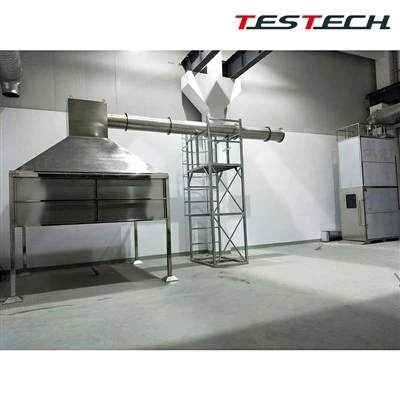
First off, let’s get one thing straight: not all flammability testers are made equal. You’ve got two main types out there now, actually—one that runs on liquid fuels you pour in, and the other that’s built for compressed gas canisters. Wait, no, hold up—let me rephrase that. The vast majority of modern battery flammability testers (the ones that meet global standards like IEC 60086-4 or UL 2054, by the way—stuff that matters if you’re doing compliance testing) use a combustible gas mix to replicate the exact thermal events that happen inside a faulty lithium-ion battery. That mix is usually propane, but sometimes it’s a mix of propane and air, or even methane depending on the test profile you’re running.
Here’s where the gas refill question comes in, and it’s way simpler than you think if you’ve got the right tester. Let’s say you’re running a standard 10-minute flammability test on a 18650 battery cell. A mid-sized tester that we supply, the one we designed for small to medium battery R&D labs, uses about 0.2 to 0.3 liters of gas per test run. If you’re doing 10 tests a day, 5 days a week, that adds up to around 50 to 75 liters of gas a month. Wait, but that’s not a “refill the tank every 24 hours” situation—our testers have a 500-liter compressed gas cylinder that hooks up permanently to the unit, so you’re only refilling the cylinder when it runs low, which is usually every 6 to 8 weeks for a lab that’s testing consistently. That’s way less frequent than, say, refilling a portable propane grill, right?
But hold on—what if you’ve got an older, legacy tester that runs on liquid fuel? I’ve seen these come through our calibration shop all the time. Some of those older models use a wick system that burns liquid isopropyl alcohol or ethanol, and yeah, those do need regular refills—like, every 1 to 2 weeks, depending on test volume. The problem with those old testers is that they’re way less accurate too; the flame can fluctuate, which means your test results are inconsistent. Nobody wants that when you’re testing a batch of 10,000 EV cells for regulatory compliance. So if you’re still using one of those, not only are you refilling gas way more often, you’re probably wasting time and money on invalid test data.
Now, let’s talk about the weird edge cases. What if you’re running high-volume testing, like a gigafactory that’s cranking out 10,000 battery packs a day? Oh, those guys—they need a way bigger gas supply. Our industrial-grade flammability testers have a bulk gas delivery system, so they hook up to a 2,000-liter cylinder that’s refilled every 3 to 4 months, or even a pipeline if they’re really set up for it. But here’s the thing: even in high-volume setups, you’re not refilling every week. The mistake a lot of new operators make is thinking they need to top off the tank after every test, but that’s not how these systems are designed. They’re calibrated to release a precise amount of gas per second, so the only time you need to add more is when the cylinder pressure drops below the minimum threshold, which our testers actually alert you to via a little dashboard light. No guesswork, no regular “check the tank” chores—just a scheduled refill when the system tells you to.
Wait, but let’s address the myth that’s been floating around some Reddit threads lately: “If you don’t refill your tester every month, it’ll give bad results.” That’s half true, but only for those old liquid fuel models. Our testers (and most modern compliant ones) have pressure sensors that monitor gas flow in real time. If the pressure gets too low, the test pauses automatically, so you don’t get a faulty result because of a low gas level. That’s a feature we built specifically because we had so many customers complaining about failed tests just because they forgot to refill. So yeah, you do need to refill, but it’s not a weekly chore—it’s a scheduled maintenance step that takes 10 minutes when you order a new gas cylinder.
Another point: the type of gas matters. We supply our customers with a certified propane-air mix that’s specifically formulated for battery flammability testing, not just the off-the-shelf propane you get at a hardware store. If you use the wrong gas mix, you’ll get flame temperatures that are too low or too high, which means your test won’t accurately replicate a real battery thermal runaway. So even if you’re refilling, you can’t just grab any gas canister—you need the right stuff. That’s where our support team comes in; we help every customer figure out exactly how much gas they need, and when to order refills, based on their test volume.
Let me share a quick story to make this real. Last quarter, we had a customer from a small EV startup reach out panicking because their old tester was running out of gas mid-test, and they had a compliance audit in two weeks. They were refilling that old liquid fuel unit every 10 days, and it was costing them over $500 a month in gas alone, plus they had two failed tests in a row because the flame was too inconsistent. We got them set up with one of our mid-sized testers, and their gas usage dropped by 70%—now they only refill once every two months, and their compliance tests have been perfect. They saved over $3,000 in gas costs in the first 3 months, plus they passed their audit. That’s the kind of value we’re talking about here.
Now, what about safety? Because when you’re dealing with flammable gas, that’s a big deal. Our testers have built-in leak detectors that shut off the gas supply immediately if there’s a leak, so you don’t have to worry about explosions. And when it comes time to refill the cylinder, we send a step-by-step video guide to every customer, so they don’t have to guess how to hook it up. No complex tools, no special training—just a few connections and you’re good to go. That’s way different from how people used to handle gas refills for old testers, which required a licensed technician every time.
Wait, let’s circle back to the original question one more time to make sure we’re not missing anything. Do flammability testers require regular gas refills? Yes, but not on a set schedule unless you’re using an older, legacy model. Modern, compliant testers (the ones you should be using if you’re making new energy batteries) only need gas refills when the cylinder pressure hits the low threshold, which is every 6 to 8 weeks for most labs, 3 to 4 months for high-volume factories. The key is that it’s not a frequent chore—it’s a scheduled maintenance step that’s way easier than you think, especially with the right equipment.
A lot of people overlook how much of a difference the right tester makes for gas usage and maintenance costs. If you’re still using that old unit that needs a weekly gas fill, it’s not just the hassle of refilling—it’s the risk of bad test data, wasted money on extra gas, and even safety issues from older systems. We built our flammability testers to solve exactly those problems, so our customers can focus on what matters: making safe, reliable new energy batteries, not messing with gas refills every other day.
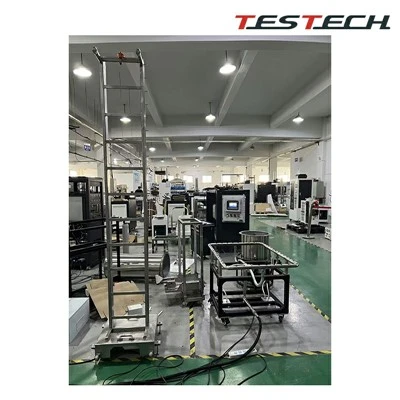
If you’re in the market for a new flammability tester, or you’re looking to upgrade your current one to cut down on gas costs and maintenance, we’d love to chat. We can help you figure out the exact model you need, walk you through gas usage estimates, and make sure you’ve got everything set up so refills are a breeze. No sales pitches, no confusing jargon—just honest talk about what works for your lab or factory.
Wire Cable Flammability Tester References
- International Electrotechnical Commission (IEC). IEC 60086-4: Secondary cells and batteries for use in portable applications – Part 4: Safety requirements, 2021.
- Underwriters Laboratories (UL). UL 2054: Standard for Safety for Household and Commercial Batteries, 2020.
- Lithium-Ion Battery Safety Testing Association (LIBSTA). Flammability Tester Best Practices for Commercial Battery Manufacturing, 2023.
- National Fire Protection Association (NFPA). NFPA 70: National Electrical Code, Article 500, 2022.
TESTech Instrument (Suzhou) Technologies
TESTech Instrument (Suzhou) Technologies is one of the most reliable new energy battery flammability tester manufacturers and suppliers in China. If you’re going to wholesale durable new energy battery flammability tester, welcome to get quotation from our factory. For price consultation, contact us.
Address: 8/F, R&D and Production Workshop No. 5, Jiangsu Guoqian Technology Innovation Industrial Park, 168 Lüliangshan Road, Huqiu District, Suzhou, Jiangsu Province, China
E-mail: molly@testech.com.cn
WebSite: https://www.testechfiretest.com/
