Hey there, if you’ve ever stood next to a fresh pour of concrete—watching it flow like thick honey one minute and hold its shape the next the second it sets—you’ve witnessed cement rheology in action. I’m [Your Company Name], and for years, we’ve been the folks making the tools that turn that “vibe check” of wet concrete into hard data. But lately, I’ve gotten so many questions from labs, ready-mix plants, and quality control teams that boil down to one thing: how do these cement rheology testing instruments actually work? No fancy jargon, no confusing equations—just the plain, practical stuff that keeps your mixes consistent, your projects on track, and your material costs from blowing up. Cement Testing Instrument
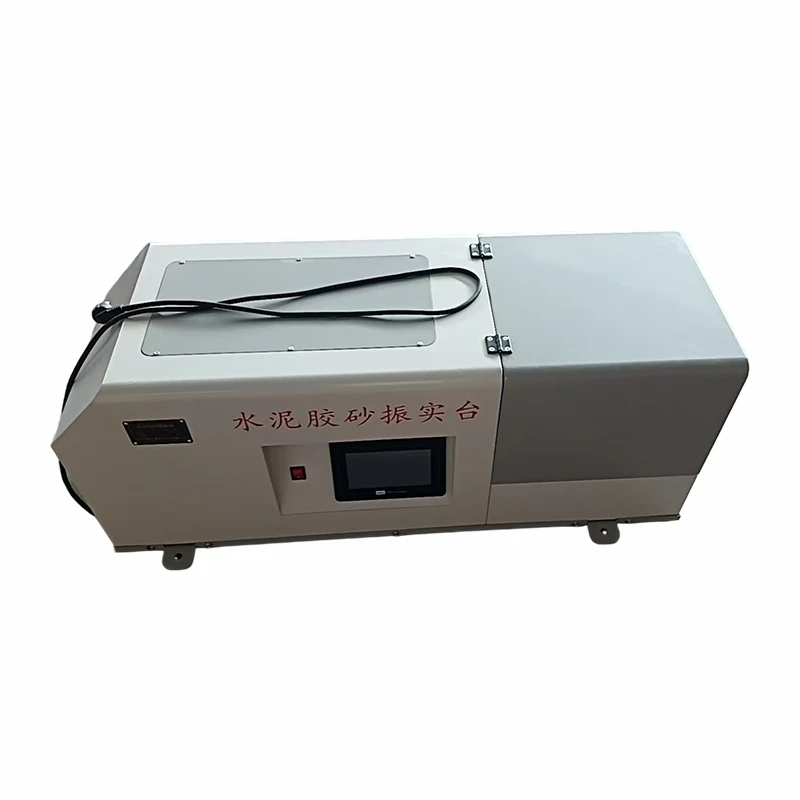
First off, let’s get one thing straight: old-school concrete testing was a guessing game. You’d slump a cone, flip it, and measure how much it sank, and call it a day. But that only tells you how thick the mix is, not how it moves under pressure—think pumping it 100 feet up a skyscraper, or flowing around rebar in a tight foundation. Rheology is all about that flow behavior: how stiff wet cement is when you twist it, shear it, shake it. And the instruments we build? They’re just fancy “force and motion” trackers designed for super sticky, not-quite-liquid stuff.
Let’s break down the core parts, because every good rheo tool works on the same basic ideas, even if they look different on the lab bench. The two big ones are the measuring system and the control unit. The measuring system is the part that actually touches the cement paste or mortar. Usually, that’s a spindle or a vane, right? Wait—why a vane instead of a paddle or a rod? Because if you use a paddle, you’re only shearing a small chunk of mix, and if it gets too thick, it can slip against the container wall. The vane (usually four flat, thin blades stuck together like a tiny four-leaf clover) digs into the whole sample, so you’re measuring the actual resistance of the mix, not just how it slides around a smooth surface. That’s a game-changer for accuracy.
Next, that measuring system connects to a motor that can spin super precisely. Not just “turn on at 10 RPM”—we’re talking spinning at like 0.01 RPM up to 100 RPM, slow enough to mimic pumping a mix, fast enough to simulate vibration from pouring. When that vane spins, the cement pushes back against it, and the instrument’s sensor measures how much torque (twisting force) it takes to keep that vane moving. Torque, by the way, is just how hard you have to yank something to make it twist—if your mix is super stiff, the torque spikes like crazy; if it’s too runny, torque is low.
Wait, but why do we test at different speeds? Because cement doesn’t behave the same at different flow rates. Imagine trying to pour syrup fast—it’s thicker, but if you let it sit, it oozes slow. Same with concrete. So a good rheo test runs a “flow curve”: start super slow (0.1 RPM, say), spin for a minute, then crank it up to 10 RPM, then back down slow. The machine records torque every fraction of a second, and that data turns into two key numbers you actually care about: yield stress and plastic viscosity.
Let me translate those into real talk, because those are the terms you’ll see on our reports. Yield stress is the “breakaway” force—like when you scrape a thick spreader of peanut butter off the lid. You have to push harder at first to get it moving, then it flows easier. That’s yield stress. Plastic viscosity is how “runnable” it is after you get it moving—like how honey flows smoother than molasses once it’s going. For concrete, if yield stress is too high, your mix won’t flow around rebar; if plastic viscosity is too low, it’ll separate (the sand and gravel will sink, water will rise) on the job site. That’s where the instrument saves you—no more guessing, you get exact numbers.
Now, let’s talk about the two main types of instruments we supply, because not every user needs the same tool. First, there’s the lab rheometer—big, bench-top, works with small 500ml samples, perfect for R&D or quality control where you test every batch’s mix design. It has precision temperature control too, because cement reactions speed up when it’s warm, so if you test a sample that’s been sitting in a hot lab, your numbers are way off. The second type is the portable rheometer—small enough to toss in a truck, fits a 2-liter bucket of fresh concrete, lets you test at the batch plant before it leaves, so you can adjust water or admixtures right then instead of having to redo a whole pour. We’ve had ready-mix customers tell us they cut rework by 30% just by catching bad mixes before they leave the yard, and that’s all from portable rheos.
Wait, let’s bust a common myth: these instruments don’t “test if your cement is good” — they test how your mix of cement, water, sand, gravel, and admixtures behaves. One customer once called us panicking because their new cement batch was “bad,” but their rheo data showed it was just that they’d added a new superplasticizer that wasn’t compatible with their existing cement. They adjusted the admixture dosage, fixed the mix, and didn’t waste $10k on cement. That’s the value here—it’s not just lab toys, it’s problem-solvers.
Let me walk you through a quick, real test we run every day at our demo lab, so you see how it works step by step. First, you take a fresh sample of cement paste (just cement + water, no aggregate, used for baseline testing) or mortar, pop it into a smooth, round container that fits exactly in the rheo’s base (no gaps, so you don’t get extra shear on the container walls). You load the vane into the mix, make sure it’s submerged a few inches—no sticking out, no touching the bottom of the container (that messes up the data). Then you start the test protocol: first, wait 30 seconds so any agitation from loading the mix settles (that’s important, because moving the mix changes its flow properties temporarily). Next, you spin the vane at a slow rate for 2 minutes, recording torque the whole time—this is measuring the “static” stiffness of the mix, like how it sits in the truck before you pour. Then you ramp up the speed to medium for another minute, simulating pumping or vibrating the mix. Then you ramp back down to slow, to see how it behaves as the flow slows. The whole test takes 5 minutes, tops, and by the end, the control unit spits out a graph: torque over speed, plus those two key numbers—yield stress and plastic viscosity.
Now, what about calibration? Because you can’t just use any old instrument—they have to be accurate, or your numbers are useless. We don’t skip that part. Every instrument we supply ships with traceable calibration standards—little “standard viscosity oils” that the manufacturer has tested against national metrology labs. You run those oils through the rheo, check if the torque and viscosity match the standard, and if they’re off, you adjust the instrument’s settings. We also send a step-by-step calibration guide, and our support team calls to walk you through it if you need—no waiting for a third-party tech to fly out.
I know, for someone who’s never used a rheo, it can sound like overkill. But let’s talk numbers: a ready-mix plant that does 1000 cubic yards a month—each yard is $150, so that’s $150k a month. If 5% of that is bad mix, that’s $7500 a month in wasted material and rework. For less than 1% of that cost, a rheo cuts that waste, ensures your mixes meet specs every time, and even helps you optimize admixture dosages so you’re not paying for more than you need. We’ve had a customer in Texas go from 2.5% waste to 0.8% after switching to our portable rheos—saved them over $80k in a year. That’s not a small number, that’s money in your pocket.
Wait, but let’s get real—what can go wrong? I’ll be honest, it’s not the instrument, it’s how you use it. The number one mistake people make is not preparing the sample right. If you mix the cement too fast, you get air bubbles that mess with torque readings. If you don’t submerge the vane deep enough, you’re just spinning air, no data. That’s why we include free training with every instrument we sell—we send one of our techs to your plant or lab, spend a day walking your team through sample prep, calibration, reading the graphs, and troubleshooting. No “figure it out on your own” manuals. We’ve had new lab techs who’d never used a rheo before get up and running by lunch, that’s how straightforward it is once you have the right guidance.
Another thing we built into our instruments: compatibility with your existing software. We know you probably use a quality control system that tracks batch numbers, material lots, test results. Our rheos export data straight to Excel, QuickBooks, or whatever QC software you already use—no more typing in numbers by hand, no more typos, no more double work. That’s a big one for teams that are already stretched thin.
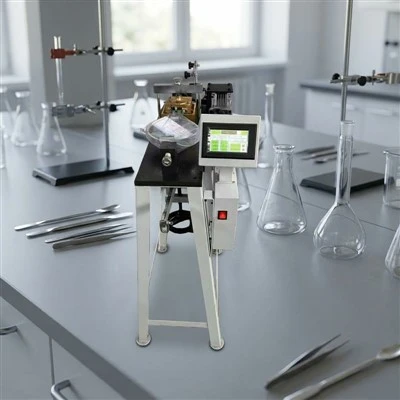
Let me wrap this up, because I don’t want to ramble. Cement rheology testing instruments aren’t some black box of fancy engineering—they’re tools that measure how wet cement moves, turning guesswork into hard numbers that save you time, money, and headaches. From lab R&D to batch plant quality control, they solve the problem of “is this mix gonna work when it gets to the job site?”
Analyzing Instruments If you’re tired of wasting money on bad batches, or if your QC team is spending too much time on unreliable slump tests, or if you just want to get consistent results every single time, let’s chat. We don’t do pushy sales calls—we send a free demo unit to your lab, let your team test it on your actual mixes, answer every question you have, and help you figure out exactly which instrument fits your needs, no pressure.
References
- Ferraris, C.F., de Larrard, F., "Rheology of Fresh Concrete: Testing and Interpretation," Cement and Concrete Research, Vol. 29, No. 10, 1999, pp. 1587-1594.
- ASTM C1749, Standard Test Method for Measurement of Hydraulic Cement Paste Rheological Properties, ASTM International, West Conshohocken, PA, 2021.
- Banfill, P.F.G., "Rheology of Fresh Cement and Concrete: A Review," Cement and Concrete Composites, Vol. 15, No. 1, 1993, pp. 59-78.
Hebei Wanluda Testing Instrument Equipment Co., Ltd.
As one of the most professional cement testing instrument manufacturers and suppliers in China, we have world-leading production equipment and strong manufacturing capabilities. Please rest assured to buy advanced cement testing instrument made in China here from our factory.
Address: Zhouguantun Village, Xian County, Cangzhou City, Hebei Province, P.R.China
E-mail: wldinstrument@163.com
WebSite: https://www.wldinstrument.com/
