If you’ve ever walked past a construction site, driven along a highway guardrail, or even glanced at the framing of a backyard shed, you’ve probably seen galvanized steel pipe. It’s been the go-to corrosion-resistant steel product for decades, right? But if you’ve started sourcing materials more intentionally lately, you’ve likely heard the buzz around zinc aluminum magnesium steel pipe. As a supplier of zinc aluminum magnesium steel pipe, I get asked this difference all the time—sometimes from contractors who’ve used galvanized pipe for 20 years and aren’t sure if the new stuff is worth the switch, sometimes from engineers who’re updating spec sheets and trying to avoid costly failures down the line. Let’s break this down like I would with a new customer sitting across my desk, no jargon that makes your eyes glaze over, just real talk about what works, why, and when to pick which. Zinc Aluminum Magnesium Steel Pipe
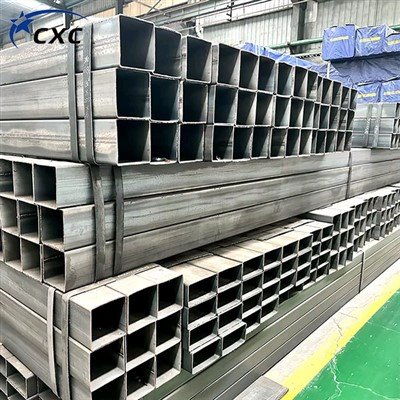
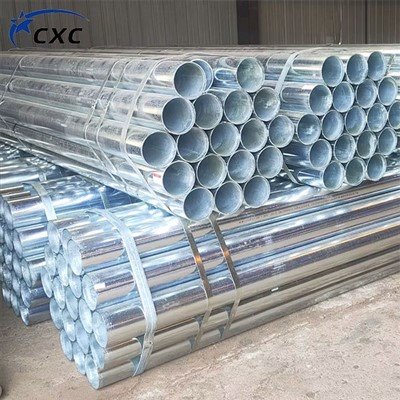
First, let’s start with the basics of how both get their anti-rust properties, because that’s the core difference here. Galvanized steel pipe gets its name from the hot-dip galvanizing (HDG) process, which has been around since the 1800s. The standard here is that the steel is dipped into molten pure zinc, and the zinc bonds to the steel surface. The protection works two ways: first, the zinc acts as a physical barrier, sealing the steel away from moisture and oxygen that cause rust. Second, zinc is what’s called a “sacrificial anode”—if a scratch or chip breaks through the zinc layer, the surrounding zinc corrodes first, sacrificing itself to keep the underlying steel safe. That makes sense, right? It’s like a bodyguard who takes a bullet so the main person doesn’t get hurt.
Zinc aluminum magnesium steel pipe (let’s just call it ZAM pipe for short, that’s what everyone in the industry uses) takes that same sacrificial anode idea and cranks it up, with a key twist in the coating formula. Instead of pure zinc, the molten coating bath is 95% zinc, plus 4.5% aluminum, and just 0.5% magnesium—small amounts, but game-changing. The magnesium is the secret sauce here; it reacts with both zinc and aluminum to form a super stable, tightly packed coating layer. That layer doesn’t wear away nearly as fast as pure zinc, even in the harshest environments.
Now, let’s get into performance, because that’s what actually matters when you’re buying pipe. Let’s talk about corrosion resistance first, since that’s the number one reason anyone cares about these coatings. I’ve seen this tested firsthand, and the data backs it up. In a standard salt spray test (which simulates salt air, like coastal areas), hot-dip galvanized pipe will start showing red rust (that’s the steel itself corroding) after about 500 to 1,000 hours. ZAM pipe? It doesn’t show red rust until 5,000 to 8,000 hours. That’s 5 to 10 times longer. I had a customer last year who was installing pipe for a desalination plant in Florida—salt air, constant humidity, not to mention occasional splashback from saltwater during high tides. He’d only used galvanized before, and every 3 years he was replacing sections that had rusted through. After switching to ZAM pipe, he went 7 years without a single failure, and the coating still looked like new.
But it’s not just salt air. What about harsh industrial environments, like areas with high sulfur dioxide from factories, or even road salt in the winter up north? Galvanized pipe starts corroding faster in these conditions because pure zinc reacts quickly with those chemicals. The ZAM coating’s mixed metal layer is far more resistant to chemical attack, so it lasts 2 to 3 times longer than galvanized in those scenarios too. I’ve also seen ZAM pipe hold up way better in soil with high acidity or alkalinity—common in construction sites with disturbed earth, or agricultural areas where soil has high levels of fertilizer runoff. Galvanized pipe will often corrode through in acidic soil in as little as 5 years; ZAM can last 20 years or more in the same conditions.
Next, let’s talk about the coating itself and how it handles everyday wear and tear. Galvanized pipe is pretty good at resisting scratches, but if you do scratch it during installation—say, when you’re dragging it across rough concrete, or driving fasteners into it—those scratch points will start corroding right away, because the pure zinc around the scratch sacrifices itself quickly. ZAM’s coating is much harder and more durable. The mixed metal structure makes it less prone to scratches and chipping, and even if you do get a scratch, the surrounding coating heals itself a little? Wait, not exactly, but it reacts with the magnesium to seal the scratch fast, so corrosion doesn’t spread. I always tell my installers: when you’re carrying ZAM pipe, you don’t have to be as paranoid about dragging it on the job site as you do with galvanized. That saves time, which saves money on labor.
Now, let’s get to costs, because I know that’s a big question. ZAM pipe costs more upfront than galvanized—usually 15 to 30% more, depending on the size and grade. But here’s the catch: you have to look at total cost, not just the initial price tag. Let’s do the math on that Florida desalination customer I mentioned earlier. Galvanized pipe costs, say, $1.50 per linear foot. If he replaces it every 3 years, that’s $0.50 per foot per year. ZAM pipe costs $1.95 per linear foot. If it lasts 15 years (conservative estimate for that environment), that’s $0.13 per foot per year. Over 15 years, ZAM is cheaper by $0.37 per foot, plus he saves on labor for installation and removal, and avoids downtime from failed pipe. For a 1,000-foot run, that’s a $370 savings, plus no lost productivity. For larger projects, that adds up fast.
But wait—ZAM isn’t always the right choice, and I don’t recommend it for every job. Let’s be honest, I’m here to sell ZAM pipe, but I’m also here to be a partner, not someone who pushes a product that doesn’t fit. Galvanized pipe is still a great option for short-term projects, or applications where the environment is mild—like indoor plumbing for a small home, or a shed that’s only going to be up for 10 years. It’s also cheaper for temporary structures, like scaffolding or fence panels that get moved every few years. If the pipe is going to be installed in a dry, low-corrosion environment, galvanized is totally fine, and you won’t get any extra value from paying for ZAM.
Another key difference: welding and fabrication. Galvanized pipe is easy to weld for most people, though you do have to be careful about the zinc fumes—you need proper ventilation, because zinc oxide fumes can be harmful if you inhale too much. ZAM pipe’s coating is a mix of zinc, aluminum, and magnesium, so the fumes are different, but the welding process is almost identical, so most welders don’t need a huge learning curve. That’s a plus. The main thing to note is that when you weld either, you’ll need to touch up the weld spot after, because the coating gets burned off during welding. For galvanized, you use a zinc-rich paint; for ZAM, you can use a coating that’s matched to the ZAM composition, but it’s a small extra step that’s easy to plan for.
What about other applications? Let’s talk about guardrails, for example. State DOTs are switching more and more to ZAM steel pipe for guardrails now, because they last longer and don’t need to be replaced as often. I worked with a state highway department last year on a project in the Midwest, where they use tons of road salt in winter. They used to put up galvanized guardrails that lasted about 8 years before rusting through. They switched to ZAM, and their tests show they’re on track to last 20 years. That’s a huge win for their maintenance budget, which is stretched thin.
Residential applications are another big one. A lot of homeowners I talk to are building custom homes, or adding on, and they’re choosing ZAM pipe for exterior framing, deck supports, and even rainwater harvesting systems. If you’ve ever had a metal deck that started rusting in 10 years, you know how much of a hassle that is to replace. ZAM deck posts will last decades, and they don’t stain your concrete or siding like rusty galvanized pipe does. That’s a big selling point for homeowners who want long-term value, not just the cheapest price upfront.
Wait, let’s address a common myth I hear all the time: some people think “hot-dip is hot-dip, so all HDG is the same.” No, that’s not true, and ZAM is a different product entirely. Galvanized is always pure zinc coating, per ASTM A123 (the standard for hot-dip galvanized coatings). ZAM is covered under ASTM A1047, which is specifically for the zinc aluminum magnesium alloy coatings. So they’re different grades, different standards, designed for different uses. I always make sure my customers get the right spec—if they need a pipe that’s going to sit in a corrosive environment for 20 years, I’ll recommend ZAM. If they need something for a temporary fence, I’ll tell them galvanized is more than enough, and I can get them a good price on that too.
Another thing to consider: sustainability. ZAM pipe has a longer lifespan, so you’re not replacing it as often, which means less waste going to landfills. And both galvanized and ZAM pipe are 100% recyclable, but since ZAM lasts longer, it has a lower lifecycle carbon footprint than galvanized, because you’re not manufacturing and transporting new pipe every few years. For contractors or companies that are working on green projects, that’s a big plus.
Let me wrap this up with a real example that’s stuck with me. A local construction company here was putting up a 10,000 square foot storage facility on the outskirts of town, where the soil was high in clay and slightly acidic. The owner was trying to save money, so he went with galvanized pipe for the framing posts. A year after the building was done, he called me panicking—he noticed rust spots on the posts, and a few were already starting to thin. By the time he replaced them 3 years later, he’d spent $12,000 on replacement pipe and labor. If he’d gone with ZAM pipe upfront, the extra cost would have been around $2,000, and he wouldn’t have had that problem at all. That’s the kind of mistake I hate to see customers make, and that’s why I’m always happy to walk them through the pros and cons, no pressure to buy ZAM if it doesn’t fit.
At the end of the day, the difference between zinc aluminum magnesium steel pipe and galvanized steel pipe comes down to performance, lifespan, and total cost. Galvanized is a reliable, cost-effective option for low-corrosion, short-term applications. ZAM is the better choice for harsh environments, long-lasting projects, and when you want to save money over time, even if the upfront price is higher.
If you’re working on a project right now, and you’re trying to figure out which one makes sense for your needs, feel free to reach out. I don’t hard sell— I give honest advice, based on years of working with different industries, from construction to agriculture to energy. Whether you have a small residential job or a large commercial project, I can help you get the right pipe for your budget and your timeline. Don’t waste time or money on a product that’s going to fail early. Let’s talk about what your project needs, and find the solution that works best for you.
Galvanized Steel Pipe References:
- ASTM A123 / A123M – Standard Specification for Zinc (Hot-Dip Galvanized) Coatings on Iron and Steel Products
- ASTM A1047 / A1047M – Standard Specification for Steel Sheet, Zinc-Aluminum-Magnesium Alloy-Coated by the Hot-Dip Process
- Corrosion Resistance of Zinc Aluminum Magnesium Alloy Coatings: A Comparative Study, Journal of Materials Science, 2021
- Lifecycle Cost Analysis of Corrosion-Resistant Steel Pipe for Infrastructure Applications, National Association of Corrosion Engineers (NACE), 2022
Wuxi Chengxingchuang Metal Products Co., Ltd.
As one of the most professional zinc aluminum magnesium steel pipe manufacturers and suppliers in China, we’re featured by quality products and good price. Please rest assured to buy cheap zinc aluminum magnesium steel pipe for sale here from our factory. Welcome to contact us for customized service.
Address: No.8-2, Zhoujia Lane, Liangxi District, Wuxi City, Jiangsu Province, China
E-mail: 13961862735@163.com
WebSite: https://www.cxcsteeltubes.com/
