If you’ve ever worked in industries like chemical processing, power generation, desalination, or pharmaceutical manufacturing, you know how critical heat transfer is to keeping operations efficient, safe, and cost-effective. But when those processes involve corrosive fluids—saltwater in desalination, acidic process chemicals in refineries, or high-temperature, high-pressure streams in power plants—standard metal heat exchangers often fall short. That’s where a titanium U-tube heat exchanger comes in, and as a supplier of these specialized units, I’ve spent years watching them solve problems no other exchanger can. U-Tube Heat Exchangers

Let’s start with the basics: what is a U-tube heat exchanger, at its core? It’s a type of shell-and-tube heat exchanger, which is one of the most common heat transfer devices in industrial use. The design gets its name from the U-shaped tubes bundled inside a large, cylindrical shell. One fluid flows through the tubes, and the other flows around the tubes inside the shell; heat transfers between the two fluids through the tube walls, with no risk of mixing (a huge plus, especially for industries where fluid contamination is a safety or regulatory risk). Unlike straight-tube heat exchangers, the U-tube design lets all tubes be bent into a single U shape, so only one tube sheet is needed to secure the bundle. That’s a major advantage: you can remove the entire tube bundle for cleaning, inspection, or repairs without disturbing the piping connections to the shell. For many facilities, that cuts downtime drastically, which directly impacts their bottom line.
Now, add titanium to that U-tube design, and you have a titanium U-tube heat exchanger—one of the most durable, corrosion-resistant heat transfer solutions available for harsh industrial environments. Let’s break down why titanium is such a game-changer here. First, titanium’s inherent corrosion resistance comes from a thin, stable oxide layer that forms instantly when it’s exposed to oxygen. Unlike steel, which rusts and flakes when exposed to moisture or chemicals, or even stainless steel, which can pit or corrode in chloride-rich environments like seawater, that titanium oxide layer self-repairs if it’s scratched or damaged. That means a titanium U-tube heat exchanger can handle fluids that would eat through other exchanger types in months or even weeks. For example, in desalination plants, where feedwater is saltwater (loaded with chlorides that are brutal on metals), titanium tubing is the go-to choice to avoid leaks that would contaminate the fresh water product. In power plants, the condenser units (a type of heat exchanger that turns steam back into water) often use titanium U-tubes to handle the cooling water, which can be from natural sources like oceans or rivers—both high in chlorides and other corrosives.
But it’s not just corrosion resistance that makes titanium ideal for U-tube exchangers. Titanium has a high strength-to-weight ratio, even at high temperatures. That means you can build a titanium U-tube bundle that’s lighter than a comparable steel bundle, but just as strong to withstand high pressure. For industries that operate at extreme temperatures—like chemical plants processing molten salts or refineries handling high-temperature process streams—titanium can hold up where other metals would fail. It also has excellent heat transfer properties, which means it doesn’t act as a barrier to efficient heat movement. A lot of super-strong metals are poor conductors, but titanium balances strength and conductivity, so you get both durability and performance.
As someone who’s been supplying U-tube heat exchangers for over 12 years, I’ve seen firsthand how a titanium U-tube exchanger solves problems that other designs can’t. Let me walk through a real example from a desalination client I worked with a few years back. They were using a stainless steel U-tube condenser, and within 18 months, chloride-induced pitting had caused leaks in the tubes. Each leak meant they had to shut down the entire plant to repair or replace the exchanger—costing them hundreds of thousands of dollars in downtime alone, not to mention the lost fresh water production. When we installed a titanium U-tube exchanger, their maintenance team told me later it’s been over 7 years, and they haven’t had a single leak. That’s not an anomaly; titanium’s corrosion resistance in chloride environments is well-documented, but it’s still surprising to see how much of a difference it makes for operational continuity.
Another example is pharmaceutical manufacturing, where processes involve aggressive solvents like acetic acid, hydrochloric acid, and various organic compounds. Stainless steel can react with these solvents over time, leading to product contamination or exchanger degradation. A titanium U-tube exchanger won’t react with most common industrial chemicals, so it maintains product purity and lasts for decades, not years. I also work with a power generation client that needed an exchanger for a waste heat recovery system, which operates at 550°F with high-pressure flue gas condensate. Their original steel exchanger corroded so badly in that harsh environment that it needed replacement every 2 years. We supplied a titanium U-tube unit, and now their maintenance team checks it annually instead of replacing it every other year—saving them over $200,000 a year in replacement and downtime costs.
But a titanium U-tube heat exchanger isn’t one-size-fits-all. That’s why, as a supplier, we work closely with each client to tailor the design to their specific needs. Let’s talk about key design considerations that go into these units, because that’s where the value of a good supplier comes in. First, tube diameter and wall thickness: depending on the fluid, we can choose smaller-diameter tubes for higher heat transfer efficiency, or thicker walls for extra durability in extremely corrosive or high-pressure environments. We also have to account for the U-bend radius—too tight a bend, and you can weaken the titanium, or create stress points that lead to cracking over time. That’s a detail that takes experience to get right; a bad U-bend can negate titanium’s strength advantage, so we use specialized bending equipment and test each bend for stress before the unit leaves our facility.
Another critical point is compatibility between the shell and the tubes. Because titanium has a different thermal expansion rate than many other metals (like carbon steel), if you use a steel shell with titanium tubes, you have to design the tube sheet and gasketed connections to handle that difference. If you don’t, thermal stress from temperature changes can cause leaks or tube damage. We also offer fully titanium shell designs for the most corrosive applications, though that’s more costly, but for clients dealing with extreme environments, it’s worth the investment.
Maintenance is another area where titanium U-tube exchangers shine, but there are still best practices to follow to get the longest life out of them. Even though titanium is corrosion-resistant, it’s not immune to damage from abrasive fluids or biological growth like biofouling in desalination systems. That’s why regular cleaning—usually mechanical brushing or chemical cleaning with mild, non-corrosive agents—is important. Unlike steel exchangers, which can be damaged by aggressive cleaners, titanium can handle most standard cleaning methods, so downtime for maintenance is minimal. Also, because the entire U-tube bundle can be pulled out for inspection, checking for fouling or damage is much easier than with straight-tube exchangers, where you have to disassemble the entire shell to access the tubes.
A common question I get from clients is: how much does a titanium U-tube heat exchanger cost upfront? It’s true that titanium is more expensive than steel or stainless steel, so the initial capital cost is higher. But here’s the thing: when you factor in lifespan, maintenance costs, and downtime, it’s almost always cheaper in the long run. A steel U-tube exchanger might cost 30-40% less upfront, but it will need replacement every 2-5 years, and each replacement costs not just the unit, but downtime and lost production. A titanium unit, on the other hand, can last 20-30 years, with minimal maintenance. For a large industrial operation, that adds up to millions in savings over the life of the equipment. I’ve had clients who were hesitant at first about the cost, but after calculating the total cost of ownership, they switched all their exchangers to titanium within a year.
As a supplier, I also emphasize quality control at every step. Titanium is a high-value material, so we take steps to ensure every unit we build is up to industry standards. We source our titanium from reputable mills that produce grade 1, grade 2, and grade 5 titanium—grade 1 is the most ductile, great for bending U-tubes, while grade 5 is stronger for high-pressure applications. Each tube is tested for integrity before it’s bent, and the entire assembly undergoes a hydrostatic pressure test to make sure there are no leaks. We also follow international standards like TEMA (Tubular Exchanger Manufacturers Association) guidelines, which set the rules for heat exchanger design and manufacturing. That’s non-negotiable for us, because our clients rely on our exchangers to keep their operations running.
Let’s also address some misconceptions I hear all the time. One is that titanium is too fragile for industrial use. In reality, it’s stronger than many steels when you account for its weight, and its oxide layer gives it incredible resistance to damage. Another misconception is that titanium U-tube exchangers are only for large-scale industries like desalination or power generation. While they’re widely used there, we also build smaller units for specialty applications, like chemical research labs or small pharmaceutical manufacturing facilities. It’s not about the size—it’s about the corrosiveness of the fluids you’re working with. If your standard exchangers are failing within a few years due to corrosion, a titanium U-tube exchanger is a viable solution, regardless of your facility’s size.
If you’re in a position where your current heat exchangers are corroding too quickly, requiring frequent replacements, or causing costly downtime, a titanium U-tube heat exchanger is worth considering. Every industry has its own unique challenges, and there’s no one-size-fits-all design, which is why I and my team work directly with clients to assess their needs, discuss design options, and build a unit that fits their budget and operational requirements. We don’t just sell an exchanger and walk away; we provide support for installation, maintenance guidance, and even retrofits if you’re looking to upgrade your existing system.
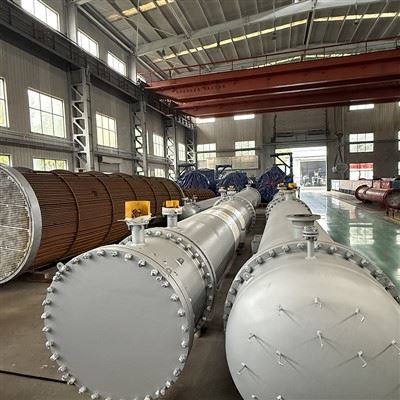
If you’re ready to learn more about how a titanium U-tube heat exchanger can benefit your operation, or want to discuss your specific heat transfer challenges, don’t hesitate to reach out. Let’s talk through your needs and find the right solution for you.
Air Cooled Heat Exchangers References
- TEMA Standards, Section R: Tubular Exchanger Manufacturers Association, 2019.
- ASME Boiler and Pressure Vessel Code, Section VIII, Division 1: American Society of Mechanical Engineers, 2022.
- “Titanium Alloys for Corrosion Resistance in Industrial Applications,” International Titanium Association, 2021.
- Heat Transfer Surface Selection Guide: Engineering Toolbox, 2023.
- Desalination Plant Heat Exchanger Design Guidelines: International Desalination Association, 2020.
Shandong Meiling International Trading Co., Ltd.
We are one of the most professional u-tube heat exchangers manufacturers and suppliers in China, featured by quality products and good service. Please feel free to wholesale advanced u-tube heat exchangers made in China here from our factory. Customized orders are welcome.
Address: No. 998 Niushan Road, Linzi District, Zibo City, Shandong Province
E-mail: dingxiaoli@sdmeiling.com.cn
WebSite: https://www.ml-heatexchanger.com/
