As a mobile explosion-proof fuel station supplier, I can’t stress enough how critical certifications are when it comes to deploying equipment that handles flammable materials in dynamic, often high-risk environments. For years, I’ve worked with fleet operators, construction companies, and remote mining teams who’ve come to me confused about which certifications are non-negotiable—and which are just marketing buzzwords. It’s not just about checking boxes; these certifications are the only way to ensure your mobile fuel station doesn’t become a safety hazard for your workers, your assets, or the surrounding community. Mobile Explosion-proof Fuel Station

First, let’s get one thing straight: mobile explosion-proof fuel stations aren’t just trailers with a tank and a pump. They’re specialized, engineered systems designed to contain volatile liquids, prevent ignitions, and withstand the rough conditions of off-road sites, temporary events, or remote locations. Every component—from the storage tank to the electrical system to the pressure relief valve—needs to meet strict standards, and those standards are enforced through mandatory certifications. Skip even one, and you’re looking at fines, failed inspections, or, worse, a safety incident that could shut down your operations entirely.
When a client first reaches out to me, their first question is almost always, “What do I need to buy to stay compliant?” The answer starts with two core certifications that form the foundation of mobile explosion-proof fuel station safety, both in the U.S. and in most global markets where our clients operate: UL 142 and NFPA 30A. Let’s break these down, because you can’t operate without them.
UL 142 is the standard for Aboveground Steel Tanks for Flammable or Combustible Liquids. It’s not a “preferred” certification—it’s mandatory for any stationary or aboveground storage tank holding fuel, gasoline, or diesel. For mobile stations, the tank isn’t just welded to a frame; it has to be built to UL 142’s specifications, which include double-wall construction for leak protection, rust-resistant coatings, and reinforced seams that can handle the vibration of being towed over dirt, gravel, and uneven pavement. I’ve seen competitors cut corners here: they use tanks built to agricultural standards, which don’t have the same pressure ratings or corrosion resistance. When a client tried to use one of these for a construction site last year, their local fire marshal shut them down within 24 hours. UL 142 isn’t just a label on a plate; it’s proof your tank won’t split during transport, won’t develop a leak in extreme cold, and won’t fail catastrophically if the station is hit by a piece of construction equipment.
Next, NFPA 30A: Code for Motor Fuel Dispensing Facilities and Repair Garages. This is the standard that governs how fuel is stored, transferred, and dispensed, and it applies directly to mobile stations, even though they’re temporary. NFPA 30A requires specific safeguards: spill containment systems that hold 110% of the tank’s capacity to prevent leaks from spreading, overfill protection that stops you from adding more fuel than the tank can hold (a common cause of ignitions), and electrical systems that are explosion-proof. Wait—explosion-proof electrical systems are another key point here. You can’t have a regular pump or a standard LED light inside a fuel station when gasoline fumes are present. Those fumes can ignite at concentrations as low as 1.4% in air, so every electrical component has to be rated for Class I, Division 1 or Zone 1 hazardous locations. That’s where ATEX or IECEx certifications come in, depending on whether you’re operating in the European market or North America.
Let’s clarify the difference between ATEX and IECEx, because this is where a lot of buyers get tripped up. ATEX is the European Union’s certification for equipment used in explosive atmospheres, and it’s mandatory for any equipment sold or used within the EU. It requires manufacturers to test every electrical component for its ability to prevent sparks, contain explosions, and withstand the conditions where it’s used. IECEx is the global harmonized standard, recognized in over 50 countries, including Canada, Australia, and parts of Asia. For clients operating in multiple regions, IECEx is often preferred because it avoids the need for separate certifications in each country. But no matter which you go with, these certifications aren’t optional for the electrical system of a mobile fuel station. I’ve had clients bring in a cheaper station with a standard pump that didn’t have IECEx certification; when they tried to use it at a mine in Chile, the local safety agency refused to grant them a permit until they upgraded the pump. That’s the kind of costly delay that comes from skipping a mandatory certification.
Another certification that’s often overlooked but non-negotiable is DOT certification for transport. Wait, right—mobile fuel stations are often towed between sites, so they’re classified as “tank vehicles” by the U.S. Department of Transportation (DOT), or equivalent bodies like Transport Canada in Canada. That means they have to meet DOT 406 specifications for non-bulk petroleum transport, which covers things like the tank’s structural integrity, labeling, emergency shut-off valves, and crash protection. If you’re towing a mobile fuel station that’s not DOT-certified, you’re violating federal transportation laws in the U.S., and you could face fines up to $50,000 per violation, not to mention liability if there’s an accident during transport. I once worked with a small construction company that bought a used mobile fuel station online, assuming it was safe to tow. They didn’t check the DOT certification, and when they were pulled over by state highway patrol, they had to pay a $12,000 fine and take the station out of service until they could get it recertified. That’s a mistake no one wants to make.
Don’t forget about spill response and environmental certifications either. Many regions require mobile fuel stations to have a Spill Prevention, Control, and Countermeasure (SPCC) plan, enforced by the U.S. Environmental Protection Agency (EPA) for facilities that store more than 1,320 gallons of fuel. The SPCC plan isn’t a certification itself, but it requires your station to have specific design features that are certified, like secondary containment and overfill protection, which tie back to the earlier certifications I mentioned. For global clients, similar environmental standards exist, like the EU’s Seveso Directive, which requires high-risk facilities (including mobile fuel stations) to have risk assessments certified by a third party.
Now, I know what some of you are thinking: “I’ve seen mobile fuel stations for sale online that don’t have all these certifications, and they’re cheaper. Why can’t I just buy those?” Here’s the thing: those cheaper stations aren’t just uncertified—they’re illegal in most places, and they’re far more likely to cause a deadly accident. Last year, I read a report about a mobile fuel station at a remote construction site in Wyoming that caught fire because a standard electrical component sparked. No one was hurt, but the station was a total loss, and the company had to shut down their operations for two weeks. If that station had been certified to NFPA 30A and IECEx, that spark would never have happened. Certifications aren’t just red tape—they’re a proven way to prevent preventable deaths and financial losses.
As a supplier, I don’t just sell mobile fuel stations; I help my clients navigate these certifications to make sure they’re compliant from day one. Every station I provide comes with a full set of documentation: UL 142 for the tank, NFPA 30A for the system, IECEx or ATEX for electrical components, and DOT certification for transport. I also work with clients to update their SPCC plans and make sure all their permits are in order, so they don’t have to deal with the headache of failed inspections or fines. For clients operating in the Middle East, I make sure stations are certified to Saudi Aramco standards, and for clients in Australia, they meet AS 1940, the Australian standard for flammable liquid storage.
One of the biggest misconceptions I hear is that certifications are just for the original equipment. That’s not true—every time you move a mobile fuel station, or make a modification to it (like adding a new pump or adjusting the tank), you have to re-verify the certifications. I had a client last year who tried to replace their 10-year-old pump with a cheaper model, and because the new pump wasn’t IECEx-certified, their local fire marshal made them take the entire station out of service until they could replace the pump with a certified one. That cost them $8,000 in downtime, not to mention the cost of the pump itself. So even small changes can require recertification, which is why buying a station from a supplier that provides long-term support and certification updates is so important.
Let me also address another point: third-party vs. self-certification. A lot of uncertified stations are labeled as “compliant” by the manufacturer, but self-certification isn’t enough. All the mandatory certifications I mentioned—UL, NFPA, ATEX, IECEx, DOT—require independent, third-party testing. That means a neutral organization tests the equipment, verifies it meets the standard, and issues a certification that’s traceable. Self-certification is just a company saying they meet a standard, and it’s not recognized by regulators. I’ve had competitors offer me stations with self-reported compliance, but I can’t sell those to my clients—regulators won’t accept them, and neither will my clients who value safety.
At the end of the day, the question of which certifications are mandatory for mobile explosion-proof fuel stations isn’t a trick question—it’s a list of non-negotiable, life-saving standards. If you’re a fleet manager, construction company owner, or remote operations manager, cutting corners on certifications isn’t just unwise—it’s a legal and ethical risk. That’s why I’ve built my business around supplying only stations that meet all these mandatory certifications, backed by full documentation and support to keep your operations running safely.
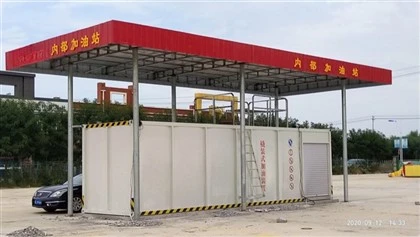
If you’re in the market for a mobile explosion-proof fuel station and want to make sure you’re choosing a compliant, safe option, don’t hesitate to reach out to me for a consultation. I can walk you through the specific certifications required for your region, help you find a station that fits your budget and your safety needs, and answer any questions you have about compliance. I’ve worked with clients across North America, Europe, Africa, and the Middle East, and I know exactly what it takes to get your operations up and running without the risk of fines, shutdowns, or safety incidents.
References
Explosion Proof Gas Station National Fire Protection Association. NFPA 30A: Code for Motor Fuel Dispensing Facilities and Repair Garages.
Underwriters Laboratories. UL 142: Standard for Aboveground Steel Tanks for Flammable or Combustible Liquids.
U.S. Department of Transportation. DOT 406: Specification for Tanks for the Transportation of Hazardous Materials.
International Electrotechnical Commission. IECEx System for Certification to Standards for Explosive Atmospheres.
European Commission. ATEX Directive 2014/34/EU on Equipment and Protective Systems Intended for Use in Potentially Explosive Atmospheres.
Shandong Jingcai Industry and Trade Co., Ltd.
As one of the most professional mobile explosion-proof fuel station manufacturers and suppliers in China, we also support customized service. With abundant experience, we warmly welcome you to wholesale high quality mobile explosion-proof fuel station in stock here from our factory. Contact us for free sample.
Address: Caojiazhuang Village Industrial Park, Lingcheng Town, Qufu City, Jining City, Shandong Province.
E-mail: shandongjingcai888@gmail.com
WebSite: https://www.sdjingcaicn.com/
