If you’ve ever stood beneath a 150-foot telecom tower and wondered how far those hidden radio signals stretch, you’re not alone. As a telecom tower supplier who’s spent the last 12 years installing, maintaining, and upgrading towers across rural towns, suburban neighborhoods, and even remote mountain villages, this question is one of the first we get from new clients—whether they’re a small business owner trying to expand coverage for their area or a city planner mapping out a downtown network. The truth is, there’s no one-size-fits-all answer. The range of a telecom tower depends on a mix of technical specs, environmental factors, and even the type of service the tower is designed to deliver. Let’s break it down, from the basics you can observe with a quick drive around your area to the niche scenarios that matter most for commercial deployments. Telecom Tower

First, let’s start with the core technical math that underpins every telecom tower’s signal: line-of-sight (LOS) propagation. Radio waves, the same ones that carry your phone calls, texts, and data, travel in straight lines until they hit an obstacle, reflect, or refract. The higher a tower’s antenna is, the farther the line of sight extends, because it sits above more ground-level obstructions like trees, hills, and buildings. A common rule of thumb here is the “horizon distance” formula: 1.22 times the square root of the antenna’s height in feet, gives the distance in miles. So a standard 100-foot tower with a roof-mounted antenna (not on a mountaintop or other elevation) has a horizon range of about 12.2 miles. A 200-foot tower jumps that to 17.3 miles, and a 500-foot tower—like many of the ones we install for rural broadband providers—gets you about 27.3 miles of unobstructed line of sight. That’s a huge difference, and it’s why tower height is one of the first things we discuss with clients.
But here’s the catch: that’s the maximum theoretical range for perfect conditions. In the real world, you almost never get perfect line of sight. A stand of 80-foot pines between your tower and a neighboring town can cut that horizon range by 30% or more. A small hill that rises halfway to your target area can block the signal entirely, unless you add a tower on the opposite side of the hill to fill the gap. For example, last year we worked with a municipal broadband provider in western North Carolina that wanted to cover a 10-mile stretch of a rural valley. Their initial plan called for a 120-foot tower on a plateau, but we pointed out that a 50-foot hill 6 miles from the tower would block 90% of the signal. Instead, we adjusted the plan to a 180-foot tower on the same plateau, plus a 60-foot repeater tower on the other side of the hill. That brought their total coverage to 18 miles, which was exactly what they needed. That’s the kind of on-the-ground adjustment we do every day, and it’s why we never quote a “fixed range” to clients without walking the site first.
Next, the type of service the tower carries has a massive impact on its range. Not all telecom signals are created equal, and that’s a mistake a lot of new operators make. For example, AM radio, which is used for local news and talk radio, has a much longer range than cell service or 5G. AM waves can bend around obstacles (that’s called diffraction) and bounce off the ionosphere, so a standard AM tower can cover 50 to 100 miles during the day, and even farther at night when the ionosphere is quieter. But cell service, especially older 2G and 4G, works on higher frequencies that can’t bend or reflect as easily, so their range is much shorter. A 4G LTE tower with a sector antenna (the flat, panel-shaped antennas you see pointing outward on most urban towers) typically covers between 1 and 3 miles in dense cities, where skyscrapers and concrete block signals, and up to 10 miles in open rural areas. That’s why rural carriers rely on taller towers—sometimes 300 feet or more—because they can extend that 10-mile range to 20 or 25 miles without needing extra infrastructure.
Then there’s 5G, the technology everyone’s talking about right now, which has two very different types of signals that drastically change range. Low-band 5G, sometimes called “sub-6GHz” 5G, uses frequencies that are similar to 4G, so it has roughly the same range as 4G: 5 to 10 miles in rural areas, 1 to 2 miles in suburbs. That’s the kind of 5G carriers are deploying to cover large swathes of farmland and small towns, because it can replace older 4G towers without a full rebuild. Mid-band 5G is a middle ground, with a range of about 1 to 3 miles, perfect for suburban neighborhoods. But high-band 5G, also called “mmWave,” is the one that’s been hyped for its speed—and its terrible range. MmWave uses frequencies above 24GHz, which are so high they can’t penetrate even small obstacles like leaves, rain, or light fog. That means a high-band 5G tower only has a range of 300 to 500 feet, basically a few city blocks. That’s why you see those tiny “small cell” towers attached to streetlights in downtown areas—they’re the only way to get mmWave coverage. For a lot of our clients, that means balancing speed and range: if you need to cover a 15-mile rural area, low-band 5G is the way to go, not mmWave.
Environmental factors also play a huge role, and they’re something you can’t always predict from blueprints. Weather is the big one: heavy rain, snow, or even dense fog can absorb or scatter higher-frequency signals, cutting range by 10 to 20% in bad conditions. We had a client in the Pacific Northwest last year who installed a 180-foot tower for 4G service, and during a record-breaking winter with 12 inches of snow, their range dropped from 8 miles to 6 miles. They ended up upgrading their antennas to higher-gain models, which are designed to focus the signal more tightly and resist weather interference, and that fixed the issue. Terrain is another factor: mountains, valleys, and even man-made structures like stadiums or shopping malls can create “shadow zones” where the signal can’t reach. We once installed a tower for a logistics company in Texas that needed to track its semi-trucks across a 20-mile stretch of highway. The tower site was perfect on a map, but a 100-foot concrete overpass midway along the route created a 2-mile shadow zone. We added a small 40-foot micro tower next to the overpass, which filled the gap and made the entire route covered. That’s the kind of granular, site-specific work that makes a good telecom tower supplier different from a big-box retailer that sells pre-built kits.
Now, let’s talk about the common myths we hear all the time, because they’re what trip up a lot of first-time buyers. One myth is that taller always means better. It’s true that height helps, but there’s a limit—beyond about 500 feet, the cost of building and maintaining a tower goes up a lot, while the range gain only adds a few miles. For a small rural town, a 250-foot tower is often the sweet spot: it’s cheaper than a 500-foot tower, and it covers 15 to 20 miles, which is enough for most small communities. Another myth is that one tower can cover an entire state. No, even a 500-foot tower’s maximum range is around 30 miles, so to cover a whole state, you’d need hundreds of towers spaced every 20 to 30 miles. That’s why national carriers have thousands of towers across the country, not a few giant ones. A third myth is that telecom towers interfere with each other. While it’s true that two towers too close together can cause signal overlap, that’s a solvable problem with proper antenna placement and frequency tuning, which is part of the site survey we do for every client.
As a supplier, we also have to consider practical constraints that affect range, beyond just technical specs. Zoning laws, for one, limit how tall you can build a tower in most areas. Many suburban and even rural towns have height restrictions of 120 to 150 feet, because they don’t want unsightly towers ruining the view. That means for those areas, we have to use higher-gain antennas or adjust the tilt of the antenna (pointing it slightly downward instead of straight out) to extend range without increasing height. In some cases, we work with clients to mount antennas on existing structures like church steeples or water towers, which are already tall and often exempt from zoning restrictions. That’s a cost-effective way to get more range without building a new tower from scratch.
We also have to think about future needs when we design a tower. A client might ask for a tower that covers 10 miles today, but in five years, they might want to add 5G or expand to another town. So we build our towers to accommodate extra antennas, power, and space for expansion, which means the range can be adjusted later without a full tower rebuild. For example, last year we installed a 150-foot tower for a small carrier in Ohio that initially only needed 4G coverage. We added space for two more antennas, and a year later, they added low-band 5G, which uses the same tower and extends their range an extra 3 miles, just by tuning the new antennas. That’s the kind of long-term value we focus on, not just a one-off sale.
So, to sum up: the range of a telecom tower isn’t a fixed number. It depends on antenna height (the biggest single factor), the type of service it carries, local terrain and weather, and even zoning laws. For most small-scale uses, like a rural home or small business, a 100 to 150-foot tower will give you 5 to 15 miles of coverage. For mid-sized communities, a 200 to 300-foot tower delivers 15 to 25 miles. For national carriers covering vast areas, taller towers paired with repeater systems can push that range to 30 miles or more.
If you’re planning to install a telecom tower for your community, business, or organization, don’t rely on online calculators or general rules of thumb. Every site is different, and a few hundred feet of difference in terrain or height can make a huge impact on coverage. We’ve helped hundreds of clients across the country, from tiny rural towns to mid-sized cities, design towers that meet their exact range needs, with minimal disruption and long-term reliability.
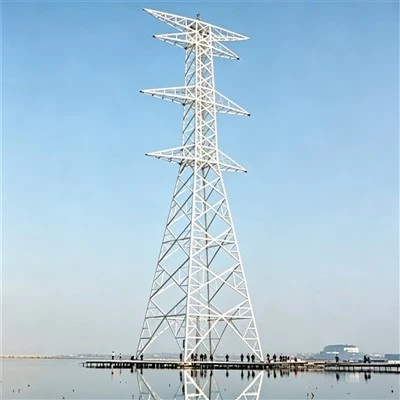
If you’re ready to discuss your telecom tower project, our team can conduct a free site survey, review your coverage needs, and provide a tailored quote that fits your budget and timeline. Contact our team today to start the conversation about finding the right tower solution for you.
Steel Support Structure References:
- Rappaport, T. S. (2002). Wireless Communications: Principles and Practice. Prentice Hall.
- Federal Communications Commission (FCC). (2021). “Cellular Tower Range and Propagation Guidelines.” FCC Office of Engineering and Technology.
- International Telecommunication Union (ITU). (2019). “Terrestrial Radio Propagation for Mobile Networks.” ITU-R P.1546-5.
- National Association of Tower Erectors (NATE). (2022). “Best Practices for Telecom Tower Site Surveys and Range Calculations.” NATE Industry Standards.
- Cisco Systems. (2021). “5G Range: Low-Band, Mid-Band, and mmWave Coverage.” Cisco White Paper.
Qingdao Hongyuanfeng Power Equipment Co., Ltd.
Hongyuanfeng is one of the most professional telecom tower manufacturers and suppliers in China, also supports customized service. Please feel free to wholesale advanced telecom tower in stock here from our factory. Good service and quality products are available.
Address: No.42 Fengwu Road, Beiguan Industrial Park, Jiaozhou City
E-mail: 13808970205@163.com
WebSite: https://www.hyfsteelpod.com/
