As a flat carrier tape supplier who’s spent the last 12 years walking manufacturing floors and sitting through late-night standard compliance calls, I’ve heard the question a hundred times: Are flat carrier tapes actually compliant with industry standards? It’s not a trivial question—miss a compliance mark, and you risk downtime, product recalls, and losing clients who’ve worked for years to build their own reputations on quality. Flat Carrier Tapes
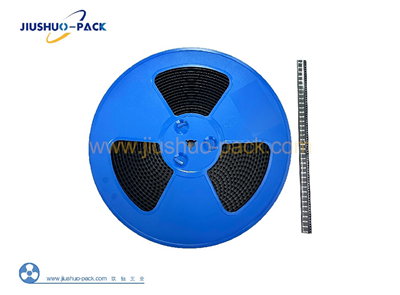
I’ve seen it happen, too. A small electronics assembler I partner with a few years back thought they could save 5 cents per reel by switching to a generic flat carrier tape that looked similar to our standard. Within three months, 12,000 surface-mount devices (SMDs) were damaged during pick-and-place, the client had to recall a full batch of consumer electronics, and we spent three days troubleshooting the root cause. The generic tape wasn’t just off on dimensions—it didn’t meet the EIA-481 standard that governs all SMD packaging, which led to misalignment in the pick-and-place machine’s nozzle and a cascade of errors. That’s the kind of story that sticks with you, and it’s why I make compliance the first thing I ask every new client, even before we talk about pricing.
Let’s break down what “compliant” actually means for flat carrier tapes, because it’s not a one-size-fits-all term. When most people reference industry standards for carrier tapes, they’re talking about documents from the Electronic Industries Alliance (EIA)—now the Electronic Components Industry Association, or ECIA—specifically the EIA-481 series, plus updates from IPC, the global association connecting electronics industries. EIA-481 covers everything from the tape’s width, sprocket hole diameter, pitch, and thickness to the dimensions of the pocket that holds the SMD. IPC adds guidelines for static discharge (ESD) and material composition, which are non-negotiable for sensitive components like semiconductors, capacitors, and LEDs that fry from even tiny static charges.
Here’s where a lot of suppliers cut corners: they make a flat carrier tape that’s “close enough” to EIA-481 numbers, but off by a fraction of a millimeter. For example, EIA-481 requires a standard sprocket hole diameter of 1.50 mm for 8 mm wide tapes, with a tolerance of ±0.05 mm. A generic tape might hit 1.47 mm, which is technically within some vague tolerance but outside the ECIA’s strict range. Over thousands of pick-and-place cycles, that tiny discrepancy adds up: the sprocket slips, the tape drags, and the pick nozzle can’t seat the device properly. We test every reel of our flat carrier tapes on coordinate measuring machines (CMMs) to confirm those dimensions, and we keep a full set of certification records for every batch—something many smaller suppliers skip because testing adds cost.
ESD compliance is another area where “flat” often gets misrepresented. A lot of cheap flat carrier tapes claim to be static-dissipative, but they only meet the minimum IPC-STATIC-20 standard’s surface resistance requirement (1 x 10^5 to 1 x 10^11 ohms per square) as a baseline. But IPC goes further, splitting compliance into categories for different component sensitivity levels: Class 1 for non-sensitive parts, Class 2 for moderate, and Class 3 for ultra-sensitive semiconductors. Last year, a client brought us a batch of LED tapes they’d sourced from a competitor; their pick-and-place machine logged 17 static discharge events during a single shift. When we tested the competitor’s tape, we found it only hit 1 x 10^10 ohms, right at the Class 2 threshold, but the client was working with Class 3 LEDs, which need a lower resistance range. Our tapes for Class 3 components hit 8 x 10^8 ohms consistently, and we publish that data in our COAs (Certificates of Analysis) so clients don’t have to guess.
Material composition is also part of compliance, and flat carrier tapes are usually made from either polystyrene (PS), polycarbonate (PC), or polyester (PET). Each has its own EIA-481 guidelines for compatibility with different sealing methods—pressure-sensitive tape, heat-seal lids, or cover films. A common mistake suppliers make is mixing materials without adjusting the tape’s thickness or surface finish. For example, a flat carrier tape made from cheap recycled PS might have inconsistent thickness, which causes the heat-seal lid to peel during transport, exposing the component and leading to contamination. Our flat carrier tapes use virgin resin, with controlled thickness tolerances (±0.02 mm) per EIA-481, so the seal is consistent even during high-temperature manufacturing environments.
But here’s the thing: being compliant isn’t just about hitting numbers on a spec sheet. It’s about how the tape performs in a real manufacturing line. I work with a medical device maker that assembles pacemaker components, where a single damaged SMD can mean a life-threatening error. They switched to our flat carrier tapes two years ago after experiencing three line shutdowns in a month from non-compliant tapes. Now, their line uptime has increased by 12%, and they’ve cut their component damage rate by 98%. That’s the real value of compliance—it’s not just a checkbox for audit trails, it’s a way to protect your production line and your products.
I’ll be honest: not all flat carrier tapes are compliant, and that’s why it’s critical to ask potential suppliers for three specific things before you place an order. First, ask for a full COA aligned with EIA-481 and the relevant IPC standard for your component type. Don’t take a spec sheet at face value—many suppliers will list EIA-481 on their website but don’t actually test every batch. Second, ask for batch testing records for dimensions and ESD performance. A reputable supplier will have these on hand, no questions asked. Third, ask if they offer custom testing for your specific machine. Some pick-and-place systems have slight variations that mean a standard compliant tape might not perform optimally, and a good supplier will work with you to adjust if needed.
Over the last year, I’ve seen more and more suppliers entering the flat carrier tape market, many of them overseas, selling at 20-30% lower prices than standard compliant tapes. I understand the pressure to cut costs, but I’ve seen too many clients end up paying for it in the long run. A recall from damaged components can cost tens of thousands of dollars, not to mention the damage to your brand reputation. That’s why I always tell new clients: the 5 cents you save on a non-compliant tape will cost you ten times that in downtime and losses.
If you’re currently struggling with line errors from flat carrier tapes, or you’re not sure if your current supplier’s tapes meet industry standards, I’d be happy to send you a free sample and a full batch certification report for our standard and ESD-compliant flat carrier tapes. We work with clients of all sizes, from small startups to Fortune 500 electronics manufacturers, and we tailor every reel to their specific EIA and IPC requirements. Compliance shouldn’t be a guessing game—it should be the foundation of every packaging component you use, and that’s the promise I make to every client who works with us.
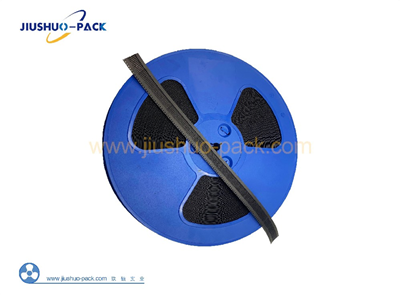
For more information on industry standards for carrier tapes and ESD packaging, please contact our team to discuss your specific requirements and review our compliance documentation.
Plastic Reel References
Electronic Components Industry Association. (2020). EIA-481: Dimensions and Specifications for Tapes and Reels for Surface Mount Components.
Institute for Printed Circuits. (2021). IPC-STATIC-20: Standard for Static Control in the Assembly and Packaging of Electronic Components, Assemblies, and Equipment.
Dongguan Jiushuo Industrial Co., Ltd.
As one of the most professional flat carrier tapes manufacturers and suppliers in China, we also support customized service. Please feel free to buy high quality flat carrier tapes made in China here from our factory. Contact us for more details.
Address: 11th Floor, Building 2, Chuangfu Center, Chashan Town, Dongguan City, Guangdong Province, China
E-mail: sales06@zaidaiw.com
WebSite: https://www.carriertape-pack.com/
