Let’s talk about a question we get asked all the time here at [Butterfly Valve Supplier]: “Are butterfly valves suitable for high temperature use?” As someone who’s spent 12 years working with valve design, manufacturing, and supporting customers across industries—from food and beverage processing to petrochemical refining—I’ve seen this doubt come up more times than I can count. I get it. When you’re moving steam, molten plastics, or superheated gases, you need a valve that won’t warp, leak, or fail mid-process. For decades, butterfly valves were written off as low-temperature, low-pressure workhorses—cheap, simple, good for water and air, but not for heat. But that’s not the whole story anymore. Today’s butterfly valves are engineered to handle temperatures that would have made their predecessors melt or seize up. Let’s break this down, no jargon overload, just straight talk from someone who sells these valves and knows how they perform when the heat is on. Butterfly Valve
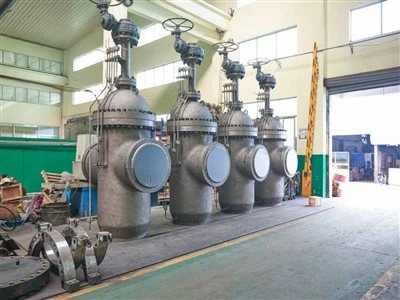
First, let’s start with the basics: what makes a valve suitable for high temperature? It’s not just the body material. It’s every component: the disc, stem, seat, seal, and the way those parts fit together. Old-school butterfly valves relied on soft rubber seats—neoprene, EPDM, or nitrile. Those materials max out around 250°F (121°C) for continuous use. Go higher, and the rubber swells, cracks, or melts, turning your seat into a leaky mess. But modern butterfly valves don’t stop at soft seats. We offer two primary lines for high-temperature applications: metal-seated butterfly valves and reinforced resilient-seated models. Let’s dig into metal-seated first, because that’s where the heavy lifting happens. Metal-seated valves use seats made from hard alloys: 316 stainless steel, duplex steel, Inconel, or Monel. These materials don’t degrade at high heat—Inconel, for example, maintains its strength up to 1800°F (982°C), perfect for applications like handling superheated steam or furnace off-gases. The disc is also a key part. A common issue with butterfly valves at high temps is thermal expansion: when the disc heats up, it expands and binds against the valve body, making it impossible to open or close. We solve that with a “lug” or “high-performance” design that leaves a small, intentional gap between the disc and body at operating temperature. It’s a tiny engineering detail, but it changes everything. I remember a customer in the chemical industry who tried a generic metal-seated valve for their 750°F (399°C) process. The disc seized after two weeks. We swapped it for our high-temperature model, and they’ve run it flawlessly for three years. That’s the kind of result I live for.
Now, reinforced resilient-seated valves—don’t sleep on these. They use a soft rubber seat, but it’s reinforced with fiberglass or aramid fibers, and blended with heat-resistant compounds like Viton or Kalrez. Wait, Viton? I thought Viton was for chemicals, not heat. Actually, Viton’s continuous temperature rating is up to 400°F (204°C), and Kalrez goes even higher, to 550°F (288°C). These seats don’t melt or crack, and they still seal tight. A food processing client of ours uses reinforced Viton-seated butterfly valves for their pasteurization line, which runs at 380°F (193°C). The valves hold pressure, don’t leak steam, and are easy to clean—critical for food safety. The soft seat also creates a tighter seal than metal, which is a big plus if you need zero leakage. The catch here is that reinforced resilient-seated valves aren’t for the absolute highest temps—they cap out around 550°F, while metal-seated can go way beyond that. But for a lot of common industrial high-temperature processes, they’re the sweet spot between performance and cost.
Next, let’s talk about what happens when butterfly valves aren’t designed for high temperature. I’ve seen two common failure modes: leakage and binding. Leakage is the obvious one. If a valve’s seat can’t handle the heat, it deforms, and fluid seeps out. In some industries—like petrochemical—even a small leak can lead to dangerous fumes or fires. Binding is the less talked-about issue, but it’s just as bad. When parts heat up, they expand at different rates. The valve stem, for example, might be made of steel, and the body is cast iron. If their thermal expansion rates don’t match, the stem can warp, or the disc can get stuck. We test all our high-temperature valves for thermal compatibility—matching stem, disc, and body materials to ensure they expand together. That’s why we can offer a 10-year warranty on our metal-seated high-temp models. Generic valves skip this step, and that’s where problems start.
Let’s get specific about real-world applications to make this tangible. Take steam systems, for example. Most industrial plants use butterfly valves for steam isolation, but a lot of them struggle with high-pressure, high-temperature steam. Our metal-seated butterfly valves are ASME B16.34 certified for steam up to 1500 psi and 850°F (454°C). That’s enough for most power plants and refineries. Then there’s molten plastic processing. Extruders run at 450–600°F (232–316°C), and you need a valve that can handle the viscous, hot plastic without getting gummed up. Our reinforced Kalrez-seated valves work perfectly here—they seal tight against the plastic, don’t break down, and are easy to remove for cleaning. Another common use is HVAC for large industrial facilities. Hospitals, factories, and shopping malls have heating systems that run at 350°F (177°C). Reinforced Viton-seated butterfly valves are lightweight, easy to install, and way cheaper than gate or globe valves for that job. I had a client who replaced their globe valves with our butterfly valves in their 400,000 sq ft warehouse HVAC system. They cut installation time by 60% and reduced energy costs because the butterfly valves have lower pressure drop.
Wait, let’s address a myth that still lingers: butterfly valves can’t handle high pressure at the same time as high temperature. A lot of people think if you’re at 800°F (427°C), you have to stick to low pressure, but that’s not true anymore. Our high-temperature metal-seated valves are rated for 600 psi at 1000°F (538°C). That’s equal to some gate valves, and butterfly valves are much smaller and lighter. That’s a huge advantage for piping systems—you don’t have to run as much heavy structural support for the valve, which saves money on installation and maintenance. Of course, there are limits. If you’re running a process at 1800°F (982°C), you’re probably dealing with molten metal or extreme furnace gases, and you’ll need a valve with Inconel or Hastelloy components, not just standard stainless steel. We can customize valves for those ultra-high temp applications too—we’ve done projects for aerospace companies handling jet engine components that run at 1900°F. So it’s not that butterfly valves can’t go to the extremes; it’s that you have to pick the right materials for the specific temp and pressure.
Now, how do we make sure our valves perform as advertised? Testing is non-negotiable. Every high-temperature butterfly valve we make goes through two rounds of testing: hydrostatic pressure testing at ambient temp, and thermal cycling testing. We heat the valve up to its maximum rated temp, cycle the disc open and closed 10,000 times, then check for leakage, binding, and material degradation. If a valve fails, we take it apart to see where it broke—maybe a seat seal, maybe a gap wasn’t enough—and redesign it. That’s how we’ve refined our line over the last decade. Last year, we updated our high-temp metal-seated design with a self-lubricating stem coating that reduces wear at high heat. Our customers noticed immediately—they’re reporting 25% longer valve life than before.
I know what some of you are thinking: “But butterfly valves aren’t quarter-turn, right? Wait, no—they are quarter-turn, which is a plus for high-temperature applications. If you have a valve that takes 10 turns to open, you’re spending more time exposing yourself to hot fluid when you maintain it. Quarter-turn means you can operate it in a second, even with a handle or an actuator. That’s a huge safety benefit in high-temp environments. You don’t want a valve operator standing near 800°F steam for 10 minutes fumbling with a gate valve. Butterfly valves cut that risk way down.
But let’s be honest—they’re not the right choice for every high-temp job. If you’re handling very viscous, abrasive materials at temperatures over 2000°F (1093°C), maybe a plug valve or a custom-designed gate valve is better. Or if you need a bubble-tight seal for extremely aggressive chemicals and high heat, you’ll want to match the seat material to the chemical compatibility, not just the temp. That’s where our team comes in—we don’t just sell a valve; we ask questions: what’s your temp? What’s the fluid? What’s your pressure cycle? How often do you need to maintain it? Then we recommend the right model. A lot of our competitors just push a one-size-fits-all valve, but that’s how you get failures. I’ve seen a customer use a low-cost rubber-seated butterfly valve for a 400°F process, and it blew a seal in three months. We replaced it with a reinforced Viton model, and it’s still going strong two years later. The difference is attention to detail.
So to circle back to the original question: Are butterfly valves suitable for high temperature use? The answer is a resounding yes—when they’re the right type, with the right materials, tested for thermal performance. They’re no longer the cheap, flimsy options they were 30 years ago. Modern engineering has turned them into a reliable, cost-effective solution for high-temp applications across industries. They’re smaller, lighter, easier to install, and operate faster than traditional gate or globe valves, and with the right seats and alloys, they can handle heat that would have spelled doom for their predecessors.

Now, if you’re working on a project that involves high-temperature fluids—steam, superheated gas, molten plastic, whatever—and you’re not sure if a butterfly valve will work, don’t guess. Our team has been helping clients match valves to their specific needs for years. We’ll send you a free application review, no obligation, and walk you through the pros and cons of each option. You don’t have to risk downtime or safety issues by picking the wrong valve. Reach out to our team today to discuss your high-temperature valve requirements and get a customized recommendation.
Ball Valve References
Valve Manufacturers Association. (2021). “High-Temperature Valve Material Selection Guide.” VMA Standards.
American Society of Mechanical Engineers. (2019). ASME B16.34: Valves—Flanged, Threaded, and Welding End.
Engineering Toolbox. (2022). “Thermal Expansion Coefficients for Common Valve Alloys.”
Petrochemical Engineering Association. (2020). “Process Valve Selection for High-Temp Steam Systems.”
Zhejiang Poro Valve Manufacturing Co., Ltd.
With abundant experience, we are one of the most professional butterfly valve manufacturers and suppliers in China. We warmly welcome you to buy customized butterfly valve made in China here from our factory. If you have any enquiry about cooperation, please feel free to email us.
Address: PORO Ind. Park, Oubei Dongou Ind. Zone, Wenzhou, Zhejiang, China
E-mail: poro@cnporo.com
WebSite: https://www.cn-poro.com/
