As a CNC boring mill supplier who’s spent the last 17 years walking shop floors, troubleshooting spindles, and fielding questions from machinists who’ve burned out three motors in a year, I can tell you this: the most common mistake I see new buyers make isn’t picking the biggest spindle—it’s guessing what their actual spindle power requirement is, instead of calculating it. I’ve had a customer come to me last month, fresh off a 20-horsepower spindle on a used mill that died mid-machining a 4140 steel flange, asking why our 15-horsepower unit outperformed the old machine. By the end of our chat, it turned out his old mill’s motor was rated at 20 peak horsepower, but only 5 continuous—meaning it couldn’t sustain the 12-horsepower cutting load his job required. That’s the kind of mistake that costs you a week of downtime, a ruined workpiece, and thousands in repair bills, so let’s break this down like I do when I’m training a new machinist on the line. CNC Boring Milling Machine
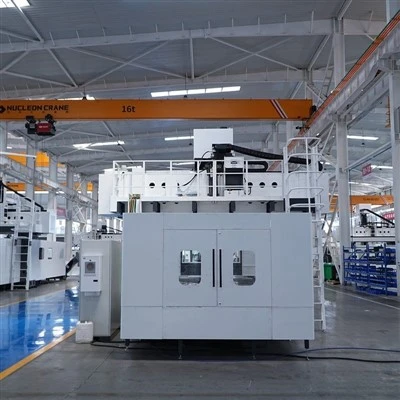
First, let’s get clear on what spindle power actually is, and what it isn’t. A lot of people mix up “horsepower numbers” with “actual cutting capability,” but they’re not the same. Spindle power refers to the energy the motor delivers to the spindle shaft to turn the cutting tool, but two types matter for real-world work: continuous power and peak power. Continuous power is the steady, consistent output the spindle can maintain for hours on end—this is what you rely on for roughing operations, the heavy, sustained cuts that remove 90% of your material. Peak power is the short burst the motor can produce for 30 seconds or less, good for facing a stubborn hard spot on a casting, but useless for a 2-hour roughing pass. The 20-horsepower motor on that old mill? It was all peak, no continuous. That’s why it died when he tried to run a 3-inch diameter face mill through 0.5 inches of 4140 steel.
Now, the big question: how do you calculate your CNC boring mill’s actual spindle power requirement? This isn’t a guess based on the size of your machine (though size is a starting point) or what your neighbor uses. It starts with two things: your workpiece material and your typical cutting parameters. Let’s use a common example: roughing a 6-inch long, 2-inch diameter solid 1018 steel shaft. Here’s how you work through it step by step, no fancy software required (I’ve taught this to shop foremen who’d never touched a CNC simulation tool):
First, calculate the material removal rate (MRR) you’re targeting. MRR is simply the volume of material you cut per minute, measured in cubic inches per minute (in³/min). For that shaft, if you’re using a 4-inch diameter end mill, a cut depth of 0.375 inches (10% of the tool diameter, a safe number for roughing), and a feed rate of 0.012 inches per tooth (ipt) at 500 RPM, the math works out to: MRR = (tool diameter) × (depth of cut) × (feed rate, in inches per minute). Wait, let’s make that easy: feed rate in IPM is number of teeth × ipt × RPM. For a 4-flute end mill, that’s 4 × 0.012 × 500 = 24 IPM. Then MRR = 4 in × 0.375 in × 24 IPM = 36 in³/min. Got that?
Next, look up the unit power for 1018 steel: that’s 0.3 horsepower per cubic inch per minute (HP/in³/min). Unit power is a standardized number that tells you how much power is needed to remove a given volume of a specific material. So 36 in³/min × 0.3 HP/in³/min = 10.8 HP. But wait—you can’t just use that exact number. That’s the theoretical power needed, and you have to add 20% to 30% for losses from the spindle, the tool’s efficiency, and any friction. So 10.8 HP × 1.25 = 13.5 HP. That’s your minimum continuous spindle power requirement for this job. That’s why our 15-horsepower mill worked for that customer—his 10.8 HP requirement was right in that range, and the 15 HP continuous unit could handle it, while his old 20 peak / 5 continuous couldn’t.
But hold on—this number changes entirely if your material is different. Let’s say that same job is 17-4 PH stainless steel, not 1018. Unit power for 17-4 PH is 0.6 HP/in³/min, almost double. So MRR is still 36, so 36 × 0.6 = 21.6 HP, plus 25% for losses, that’s 27 HP. Suddenly, your spindle power requirement jumps way up, because hard metals need more energy to shear their material. I see this all the time with job shops that take on one stainless job and try to use a 10-horsepower mill for it—they wonder why the motor stalls halfway through.
Now, there are a few common variables that throw this calculation off, and I’ve learned each one over a decade of fixing spindles. First, tool type: a solid carbide end mill is more efficient than a high-speed steel (HSS) tool, so it uses less power. A face mill with insertable carbide teeth is even more efficient, so your unit power drops by 10% or so. Second, spindle speed: too high a speed for a hard material will not only dull the tool faster, but it also wastes power on spindle friction, rather than cutting. I’ve had a machinist come to me with a 25-horsepower spindle that couldn’t run a stainless job at 300 RPM, but once he dropped speed to 150 RPM, it ran like a dream—because he was wasting power on unnecessary high speed. Third, machine rigidity: a flimsy old mill will waste 15% more power on vibration, because the spindle has to work harder to hold the tool steady. That’s why when we sell a CNC boring mill, we always factor in the machine’s structural rigidity into the power recommendation—we don’t just give a generic HP number, because a rigid mill needs less power than a flexy one.
Wait, let’s also clear up a myth I hear all the time: bigger is always better. A customer bought a 50-horsepower spindle last year for a job that only needed 18. He told me he wanted “extra power” for future jobs, but by the end of the year, he was using 40% less electricity than his old 30-horsepower mill, because he was running at lower power for most of his work. Oversized spindles aren’t just a waste of money on the initial purchase—they cost more to run, they have higher maintenance, and they can cause tool deflection if you’re running a small tool on too big a spindle. That’s another mistake: a 50-horsepower spindle is designed for heavy cuts, so if you’re running a ½ inch end mill, you’re going to deflect the tool, ruining the accuracy of your boring work.
So what’s the right way to match a CNC boring mill’s spindle power to your actual needs? Let’s break it down by use case, because that’s how most shops operate:
-
Light duty work: Small shops that do mostly aluminum, brass, and low-carbon steel parts, with roughing cuts under 10 in³/min. For these, a 7.5 to 10 continuous horsepower spindle is more than enough. I’ve got a customer who runs a small 3-axis mill for custom hydraulic components, and he’s been running our 8-horsepower unit for 6 years, never had a spindle issue.
-
Medium duty work: Job shops that handle a mix of 1018, 4140, 1030 steel, and occasional stainless or cast iron, with MRR between 10 and 50 in³/min. For this, 12 to 15 continuous horsepower is standard. That’s the sweet spot for most general machining work, and the mill most of our customers buy for that.
-
Heavy duty work: Large job shops that machine forgings, heavy flanges, large castings, or hard materials like 17-4 PH, Inconel, or titanium, with MRR over 50 in³/min. Here you need 20 to 30 continuous horsepower, and sometimes even higher if you’re running very large tools. Last year we sold a 35-horsepower CNC boring mill to a customer who machines large wind turbine flange forgings—his MRR is 70 in³/min, and that power is non-negotiable.
But even with these numbers, there’s a caveat: if you’re doing heavy boring operations specifically, not just milling, you need to adjust. Boring is different because the tool is inside the workpiece, so the chip load is smaller, but the friction is higher, especially for deep bores. I usually add 5 to 10% power for deep boring jobs, because the spindle has to work harder to turn the tool when it’s submerged in the workpiece. A customer came to me last quarter who was struggling with deep bores in 4140—he had a 15-horsepower mill, but his boring operations kept stalling, so we upgraded him to a 18-horsepower continuous spindle, and the problem went away.
Now, let’s talk about what happens when you get this wrong. I’ve seen: a $20,000 spindle replaced because a 5 continuous HP motor couldn’t handle a 10 HP cut, a 6-week delivery delay for a customer’s aerospace part because their mill couldn’t finish it on time, and even a workpiece that shattered because the spindle lacked power, causing a piece to fly off and damage the machine. All of these are avoidable if you calculate your spindle power requirement correctly, instead of grabbing a number off a brochure.
So, as a supplier, what do I do to make sure my customers get this right? I don’t just send a spec sheet. I ask them three questions first: What’s the most common material you machine? What’s your typical roughing MRR? And what’s the largest tool you use? Last week, a customer came in asking about a CNC boring mill, and when I asked about his materials, he said 90% of his work is 6061 aluminum, with a small amount of 1018. His MRR for roughing aluminum is 15 in³/min, so he only needed a 10-horsepower spindle—even though he initially asked about a 20-horsepower unit, thinking bigger was better. That $10,000 difference between a 10 and 20-horsepower mill was enough that he went with the smaller one, and he told me later it’s been perfect for his work.
If you’re in the market for a CNC boring mill, don’t fall into the trap of “more HP = better.” Take the time to calculate your actual requirement, factor in your work’s specific needs, and if you’re not sure, don’t hesitate to reach out to talk through it. We’ve helped hundreds of customers avoid the common mistakes I mentioned here, from peak-only motors that can’t sustain cuts to oversized spindles that waste money. We don’t just sell machines—we’ve been in your shop, we know the problems you’re facing, and we can help you pick the right spindle power for your work.

At the end of the day, spindle power isn’t a marketing number—it’s the thing that gets your parts cut on time, keeps your spindle running for years, and keeps your shop profitable. I’ve seen too many shops go wrong by treating it like a box to check on a spec sheet, instead of a critical part of their machining process. Take the time to do the math, ask the right questions, and you’ll end up with a mill that works for you, not against you. If you’re ready to talk through your specific needs and find the right CNC boring mill for your operation, we’re here to help.
Planer Type Boring and Milling Machines References:
- Modern Machining Technology: Advanced Processes and Cutting Tools, Society of Manufacturing Engineers, 2019.
- Spindle Power Calculation Guidelines for CNC Milling and Boring Machines, National Institute of Metalworking Skills, 2021.
- Machining Data Handbook, 9th Edition, MetCut Solutions, 2022.
- Machine Tool Spindle Design and Application, CRC Press, 2020.
5Axis (Shandong) CNC Equipment Co., Ltd.
As one of the most professional CNC boring milling machine manufacturers and suppliers in China, we also accept customized orders. Please feel free to buy cheap CNC boring milling machine for sale here from our factory. For price consultation, contact us.
Address: No.2000, Beixin West Road, Jinghe Street, Tengzhou City, Zaozhuang City, Shandong Province
E-mail: summer@good5axis.com
WebSite: https://www.china5axis.com/
