If you’ve ever worked in electrical power systems—whether you’re a maintenance engineer, a substation technician, or a quality control specialist for power equipment—you know how critical current transformers (CTs) and potential transformers (PTs) are. These devices don’t just measure voltage and current; they protect grids, ensure accurate billing, and prevent catastrophic equipment failures. For decades, CT analyzers have been the go-to tool for testing CT performance, but I’ve heard a question crop up repeatedly in my interactions with clients: “Can a CT PT analyzer test potential transformers?” CT PT Analyzer
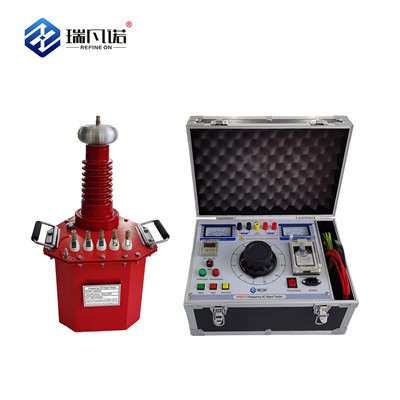
As a supplier of CT PT analyzers, I get this question all the time. It makes sense—many power facilities don’t want to invest in separate test tools for every device. Why buy a dedicated CT tester and a separate PT tester when one unit could do both? But the answer isn’t as straightforward as a yes or no. It depends on what you’re testing, what standards you’re following, and how your analyzer is built. Let me break this down based on years of field experience and what our team sees daily.
First, let’s clarify what each device does, because their design and testing requirements are worlds apart. CTs are series-connected devices: they sit in line with high-voltage conductors, stepping down large currents (say, 1000A) to manageable levels (5A or 1A) for meters and relays. Their key test points include turns ratio, polarity, excitation current, winding resistance, and burden performance. PTs, by contrast, are parallel-connected, similar to power transformers but much smaller. They step down high voltage (like 11kV or 33kV) to standardized low voltages (usually 100V or 120V) for instrumentation and protection. PT tests focus on turns ratio accuracy, winding resistance, no-load loss, phase angle displacement, and insulation resistance.
Now, early CT analyzers were built only for CT-specific tests. They generate high currents to simulate primary CT loads, measure secondary output, and analyze excitation curves. But modern CT PT analyzers—like the ones we manufacture—are designed with flexible output capabilities that can adjust voltage or current depending on the test mode. That’s where the overlap starts.
For example, testing PT turns ratio: a good CT PT analyzer can be configured to output a low-voltage primary to match a PT’s low-side rating, then measure the secondary voltage and calculate the ratio, just like a dedicated PT tester. We’ve had clients use our CT PT analyzers for this exact task during routine substation maintenance. They don’t need to haul a separate PT tester; they can connect the same tool they use for CTs to test PTs on the same panel. That’s a huge time-saver for teams that work on multiple devices in a single shift.
But here’s the catch: not all tests for PTs can be done with a standard CT analyzer. Let’s talk about excitation testing for PTs. PT excitation is the relationship between the voltage applied to the primary winding and the no-load current drawn by the secondary. Unlike CT excitation, which requires a high current source (to simulate the CT’s primary load), PT excitation needs a high voltage source. Most standard CT analyzers have a current output range of 0 to 50A, which is perfect for CTs, but only a small number can output voltage above, say, 100V—just enough for basic turns ratio, but not enough to test PT excitation at rated voltage. A PT rated for 11kV would require a test voltage of at least 10% of rated voltage (1.1kV) for a meaningful excitation test, which many entry-level CT analyzers can’t deliver. That’s a key point our sales team always clarifies with customers: if you’re only testing PT turns ratio and resistance, a basic unit works, but if you need full PT excitation testing, you need a CT PT analyzer with a high-voltage output option.
Another area where CT PT analyzers fall short is PT burden testing. Burden for PTs is the load on the secondary winding, measured in VA, and it’s critical to ensure the PT doesn’t overheat or give inaccurate readings. Dedicated PT testers can simulate precise, low-power burdens (like 0.5VA, 1VA) that match instrumentation loads. Most CT analyzers are designed for higher current burdens, so their ability to simulate low VA loads for PTs is limited. If a client relies on accurate PT burden measurements, they might need a specialized PT tester, though some mid-range CT PT analyzers offer improved burden simulation that works for both CTs and PTs.
Let me share a real example from a client last month. A mid-sized utility in the Pacific Northwest reached out to us after a few bad experiences with a competitor’s entry-level CT analyzer. They’d tried to test their 33kV PTs with it, and while the turns ratio was correct, the excitation test results were inconsistent—they were only getting up to 800V from the tester, not the 3.3kV they needed for the test. They ended up needing to rent a dedicated PT tester for that job, which cost them more than the difference between a mid-range CT PT analyzer and a basic unit. That’s why we always advise customers to map their test requirements before buying: list every test you need to run on CTs and PTs, and check the analyzer’s specs for each one.
Another consideration is accuracy standards. Industry standards like IEEE C57.13 (for CTs) and IEEE C57.18 (for PTs) outline specific test tolerances and methods. A CT PT analyzer must meet these standards for both device types to be considered valid. Some cheaper units on the market cut corners: their phase angle measurement for PTs is only accurate to 0.1 degrees, while IEEE C57.18 requires 0.05 degrees for precision PTs. That’s a problem for utilities that rely on phase angle data for power quality monitoring. Our CT PT analyzers are calibrated to meet these exacting standards, so our customers know their test results are compliant for audits and regulatory reporting.
What about older PTs? Many substations still have electromechanical PTs installed from the 1980s and 1990s. These units often have higher no-load losses, so testing them with a tool that can generate steady, low-voltage (but precise) output is important. Entry-level CT analyzers sometimes have noisy output, which can skew no-load current measurements for PTs. Our units have active filtering that eliminates electrical noise, making them reliable for both new and vintage PTs.
Of course, there are scenarios where a CT PT analyzer isn’t the best choice for PT testing. If you’re working on high-precision metering PTs that require phase accuracy within 0.02 degrees, a dedicated PT tester will still give you more reliable results. Or if you need to test PT capacitance and dissipation factor (a key insulation test for medium-voltage PTs), most CT analyzers don’t have that capability at all—you’d need a power factor analyzer for that. That’s a line we don’t cross: we never overpromise what our CT PT analyzers can do, and we’re upfront with customers when a test requires a different tool.
Over the years, we’ve seen customers save an average of 20% on their test equipment budget by choosing a good CT PT analyzer over separate CT and PT testers. They also cut down on training time: instead of learning two different tools, their technicians master one. The key is choosing a unit that’s built for dual testing, not just a CT analyzer with a minor PT add-on. That’s why our engineering team works closely with field technicians to refine our analyzers’ output capabilities: we increased voltage output for PT excitation tests, improved low-VA burden simulation, and added test presets for both CTs and PTs so users don’t have to adjust settings manually.
If you’re weighing whether to invest in a CT PT analyzer for your team, here’s a quick checklist to run through:
- What tests do you perform on PTs? (Turns ratio? Excitation? Burden? Insulation?)
- What are the voltage and current ratings of your PTs?
- Do you need results compliant with IEEE or IEC standards?
- Will the analyzer be used primarily for CTs, with occasional PT tests, or vice versa?
For most small to mid-sized utilities, industrial plants, and substation maintenance teams, a mid-range CT PT analyzer covers 90% of their PT test needs, including the most critical routine tests. Only high-precision metering or heavy industrial applications need specialized PT equipment.
I’ve had technicians tell me before that they used to spend half their time hauling two test carts to a substation: one for CTs, one for PTs. Now they bring one CT PT analyzer, finish their tests twice as fast, and have fewer parts to maintain. That’s the kind of value we strive to deliver as a supplier.
At the end of the day, the answer to “Can a CT PT analyzer test potential transformers?” is a qualified yes. It depends on the analyzer’s design, your test requirements, and the standards you need to meet. But with the right tool, you don’t have to choose between CT and PT testing. You can have both.

If you’re ready to explore options for a CT PT analyzer that fits your specific testing needs, reach out to our team to discuss your requirements, see demo units, and learn how we can customize solutions for your power system maintenance tasks. We’re here to help you make the most efficient and cost-effective decisions for your test equipment.
Transformer Oil Tester References
IEEE C57.13-2021, Standard for General Requirements for Instrument Transformers
IEEE C57.18-2019, Standard for Potential Transformers
Refine On (Hebei) Electric Power Technology Co., Ltd.
Refine On (Hebei) Electric Power Technology Co., Ltd. is one of the most reliable ct pt analyzer manufacturers and suppliers in China, also supports customized service. Please feel free to wholesale advanced ct pt analyzer at competitive price from our factory. Contact us for quotation.
Address: Building 13, Liandong U Valley, No.64, Jing SAN South Street, Economic Development Zone, Mancheng District, Baoding City, China
E-mail: wang@transformer-test.com
WebSite: https://www.transformer-test.com/
