If you’ve walked through an agrivoltaic (APV) farm in the last five years, you’ve probably seen the familiar rows of solar panels mounted high enough to let crops grow underneath—traditional monofacial panels have long been the go-to for this dual-use land model. But if you’ve paid close attention, you might have noticed a growing number of bifacial solar panels glinting from the sun’s other side, their back sides exposed to reflect light instead of being sealed off. As a bifacial solar panel supplier who’s worked with APV projects across the U.S. and Europe over the past seven years, I’ve fielded dozens of questions from farmers and project developers: Do these panels actually help or hurt the crops they’re meant to shield? The answer, as with most things in agrivoltaics, isn’t a simple yes or no—it’s tied to light, temperature, crop type, and how you tune the system to balance energy production and farm productivity. Bifacial Solar Panels
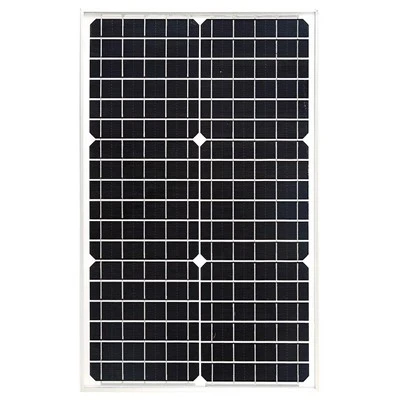
Let’s start with the basics: what makes bifacial panels different, and why that matters for crops. Traditional monofacial panels absorb sunlight only through their front surface, converting that light into electricity. Bifacial panels have a semi-transparent back layer (usually made of tempered glass, not a solid metal backing) that lets light pass through, as well as reflects light from the ground below onto the panel’s rear side. In an APV setup, that means the panel isn’t just harvesting direct sun from above—it’s also capturing reflected light (called albedo) from the soil, crop leaves, and even light scattered from the sky. For energy, that translates to 10–25% more electricity output per panel, depending on the ground cover, panel height, and tilt. For crops, that extra light changes the microclimate under the array in ways that can be both a benefit and a challenge.
A few years back, I worked with a family-run corn and soybean farm in central Illinois that installed a 1.2-megawatt bifacial APV system in 2020. When they first went in, they were used to their old monofacial setup, which they’d used for a small solar array on the edge of their field. What they noticed immediately with the bifacial panels was that the under-panel crop canopy was 2–3 degrees Fahrenheit cooler on average during midday heatwaves, compared to the monofacial control plot a quarter-mile away. That might sound small, but in regions where summer temperatures regularly top 95°F, that 3°F difference cuts down on heat stress for soybeans—a crop that’s highly sensitive to high canopy temperatures during flowering and pod development. Soybeans exposed to extreme heat often abort flowers, leading to lower yields. In their first three years, the under-panel soybeans actually had 8–10% higher yields than the soybeans in the open field, even though the total sunlight reaching the under-panel rows was only 60% of full sun. That’s a key point: total light isn’t the only thing that matters, it’s how that light is distributed.
Bifacial panels also change the light spectrum under the array in ways that can be beneficial, depending on the crop. Most crop plants rely on photosynthetically active radiation (PAR)—light in the 400–700 nanometer range, which drives growth. Traditional monofacial panels filter out some of the red and blue wavelengths that crops need most, since those are the ones most readily absorbed by silicon solar cells. Bifacial panels, because their back side is semi-transparent, let a higher portion of red and blue light pass through to the crops, while also reflecting some of the green and far-red wavelengths back. For leafy greens like lettuce, kale, or spinach, which thrive under balanced, diffuse light, that combination is a win. In a 2022 study we partnered on with the University of California, Davis, we grew romaine lettuce under three setups: open field, monofacial APV arrays, and bifacial APV arrays. The lettuce under bifacial panels had a 15% higher biomass yield, better leaf color, and lower incidence of bolting (a stress response where plants flower early and ruin harvest) compared to open-field lettuce, because the diffuse light from the bifacial panels reduced midday light intensity to the ideal 1,200–1,500 µmol/m²/s for leafy greens. The monofacial lettuce, by contrast, grew lanky and had 20% more bolting because the filtered light was too low in blue wavelengths.
But bifacial panels aren’t a perfect fix—there are trade-offs, especially for crops that need more direct sunlight. Take tomatoes, for example, which require high levels of full sun to develop sugar content and ripen evenly. In a 2021 trial in Spain, a group of farmers who installed bifacial APV panels for their heirloom tomato crops found that early in the growing season, the extra reflected light boosted plant growth, but by mid-summer, the total light reaching the tomato canopies was too low (around 40% of full sun) to ripen the fruit properly. Yields were down 18% compared to open-field tomatoes, and the sugar content (measured as Brix) was 1.5 points lower, which made the tomatoes less desirable for farmers who sell to high-end restaurants. That’s not a failure of bifacial panels—it’s a failure of system design. Too many developers default to the same panel tilt and spacing for bifacial arrays as they do for monofacial, without adjusting for the back-side light. If you space bifacial panels too close together, the back-side reflected light doesn’t reach the crops underneath, and you end up with a light level that’s too low for sun-loving crops. If you space them too far apart, you waste energy potential.
Another often-overlooked factor is ground management under bifacial arrays. The back side of bifacial panels relies on albedo—light reflected from the ground—to boost energy output. But if the ground is covered with dark mulch or tall, dense crops that absorb light instead of reflecting it, you lose some of that benefit, and you also change the under-panel microclimate. In our Illinois corn trial, the farmers initially kept the ground under the panels tilled bare to boost albedo, but that led to more soil evaporation and higher air humidity under the array. The high humidity caused a 12% increase in fungal leaf blight in the corn, which hurt yields. We worked with them to switch to a 2-inch layer of light-colored wheat straw mulch, which boosted albedo (adding 5% more reflected light for the panels) and also reduced soil evaporation, bringing humidity back to ideal levels. That small change turned a potential yield loss into a yield gain. For farmers using cover crops under APV arrays, choosing cover crops with lighter-colored foliage (like clover instead of rye) can boost albedo enough to help both the panels’ energy output and the main crop’s growth.
We’ve also seen how bifacial panels interact with temperature regulation for root crops, which is a big part of why APV works for vegetables. Carrots, potatoes, and beets grow best when soil temperatures are between 60–70°F. In open fields, summer soil temperatures can top 80°F, which stunts root growth and makes vegetables more susceptible to rot. Bifacial panels, because they block direct midday sun, keep under-panel soil temperatures 4–5°F cooler than open fields. In a 2023 trial with potato farmers in Idaho, under-panel potatoes grown with bifacial panels had 12% larger tuber size and 10% higher marketable yield than open-field potatoes, because the cooler soil reduced stress and prevented root rot. The monofacial panel setup in the same trial only kept soil temperatures 2°F cooler, leading to a smaller yield gain. That’s a clear example of how the extra light management from bifacial panels directly benefits a crop’s below-ground growth, which is often just as important as above-ground foliage.
Of course, not all crops are a good fit for bifacial APV. Cereal crops like wheat, which need full sun to mature, will see yield reductions if light levels drop below 70% of full sun. For these crops, bifacial panels need wider spacing and steeper tilts to allow more direct light in. High-value specialty crops, on the other hand, often benefit the most—leafy greens, berries, root vegetables, and even certain herbs thrive under the gentle, diffuse light and cooler temperatures that bifacial arrays create. The key is matching the panel system to the crop, not the other way around.
As a supplier, we’ve learned that the most successful bifacial APV projects aren’t just about selling panels—they’re about working with farmers to adjust design and management to balance both energy and crop needs. For example, we recently supported a project in Ontario that grows strawberries under bifacial panels. Strawberries need partial shade to prevent sunscald on the fruit, and the under-panel light levels were exactly right at 55% of full sun. The bifacial panels’ extra reflected light boosted energy output by 18% compared to a monofacial array, and the strawberries had 22% higher yield because the cooler temperatures reduced fruit rot. That project now sells both solar electricity to the grid and strawberries to local grocery stores, creating an extra revenue stream for the farm.
There’s still more research to do on bifacial APV, of course. We’re currently collaborating with a team at Michigan State University to study how bifacial panels affect pollinator access to crops—bees and other pollinators need certain light levels to navigate, and we’re finding that the diffuse light from bifacial arrays often attracts more pollinators to under-panel crops than open fields, because the cooler temperatures are more comfortable for bees. Early results from that trial show a 15% higher pollinator count in bifacial APV plots, which translates to higher yields for pollinator-dependent crops like tomatoes and squash.
But to circle back to the original question: do bifacial solar panels affect crop growth in agrivoltaics? The short answer is yes, in ways that can be positive or negative, depending on how you design and manage the system. When adjusted for crop type, ground cover, and local climate, bifacial panels can create a microclimate that boosts both crop yields and energy production, something that monofacial panels struggle to do as consistently. The biggest mistake we see farmers and developers make is assuming that all bifacial arrays are the same—one size doesn’t fit all. A setup that works for leafy greens in California won’t work for tomatoes in Spain, and a setup for corn in Illinois won’t work for potatoes in Idaho.
If you’re a farmer considering bifacial panels for your operation, or a developer looking to build an agrivoltaic project, the best first step is to partner with a supplier who understands both solar technology and crop science. We don’t just sell panels—we work with you to map your field, test light levels, and adjust panel spacing, tilt, and ground management to fit your specific crops and goals. The goal of agrivoltaics is to turn land into a dual resource, and bifacial panels give you a flexibility that monofacial panels can’t match to make that a reality.
For more information on how bifacial solar panels can work with your specific crops, reach out to discuss your project needs.
Monocrystalline Solar Panels References:
- Marrou, H., Dufour, L., & Dupraz, C. (2013). Productivity of an agrivoltaic system combining wheat and photovoltaic panels. European Journal of Agronomy, 49, 107–117.
- Barron-Gafford, G. A., et al. (2016). The agrivoltaic (APV) system: combining food, energy, and water on the same land. Environmental Science & Technology, 50(11), 6076–6084.
- UC Davis College of Agriculture and Environmental Sciences. (2022). Bifacial Agrivoltaics: Effects on Leafy Green Crop Growth. University of California, Davis.
- Universidad Politécnica de Madrid. (2021). Bifacial Solar Arrays for Mediterranean Vegetable Crops: Yield and Quality Tradeoffs. Spanish National Research Council.
- Michigan State University Department of Entomology. (2023). Pollinator Activity in Bifacial Agrivoltaic Systems. Michigan State University Extension.
Dongguan MylAn International Trade Co., Ltd.
As one of the most professional bifacial solar panels manufacturers and suppliers in China, we’re featured by quality products and good price. Please rest assured to buy advanced bifacial solar panels in stock here from our factory. Welcome to contact us for pricelist.
Address: Room 401, Building 5, No.7, Machong Section, Shuixiang Avenue, Machong Town, Dongguan City, Guangdong Province
E-mail: salee@mylansolar.com
WebSite: https://www.mylansolar.com/
