Hey everyone, thanks for stopping by! I’m Jake, been working in the rotary kiln and dryer game for over a decade now, and let me tell you—one of the most common questions I get from folks dealing with sawdust is “how do I dry this stuff right without messing it up?” Sawdust’s tricky, right? It’s super fine, has a ton of surface moisture, and if you rush the drying, you end up with uneven dryness or even dust explosions. That’s where rotary kiln dryers come in, and let me tell you, we build these bad boys exactly for tasks like this. Let’s break down how to dry sawdust in a rotary kiln dryer the smart way—no fluff, just what works from years of on-site installs. Rotary Kiln and Dryer
First off, let’s get the basics straight: why sawdust needs proper drying. If you’re using it for biomass pellets, animal bedding, or even as a fuel source for boilers, moisture content (MC) is non-negotiable. Raw sawdust usually has 30-50% MC, and you need to get it down to 8-12% for most end uses. Too high, and pellets won’t hold their shape; too low, and you’ll have dust flying everywhere (hello, explosion risk, which we’ll touch on later).
Now, the rotary kiln dryer itself—wait, no, let’s walk through the step-by-step process, not just the machine. First, you can’t just shovel wet sawdust straight into the dryer without prepping it. I see this mistake all the time. If the sawdust’s clumpy, like if it was stored in a damp pile, you need to break up those clods first. We usually recommend a hammer mill or a screw feeder with a de-lumping attachment for this. Clumps mean uneven exposure to heat—some bits stay wet, some burn too hot. Prepping the feed makes a massive difference. Pro tip: don’t feed sawdust that’s more than 50% MC straight into the dryer, if you can avoid it. A little pre-drying with a simpler machine or even just letting it air out for a day cuts down on energy costs big time.
Next, getting the feed rate right. This is where a lot of new operators mess up. The rotary kiln dryer isn’t a big trash can—you can’t just dump a ton of sawdust in and expect it to dry on its own. We calibrate our feeders to match the kiln’s capacity. For sawdust, that’s usually 1-3 tons per hour, depending on kiln size, but here’s the thing: feed rate ties directly to air flow and temperature. If you feed too fast, the sawdust doesn’t have enough time to transfer moisture; too slow, and you’re wasting energy over-drying, plus you’re kicking up too much dust. We tell every customer we work with: start low, check the output MC, and crank it up just a little at a time until you hit that sweet spot.
Then the heat part. Rotary kiln dryers use hot air, right? For sawdust, we don’t crank the heat to 1000°F—wait, no, let’s be precise. The inlet temperature should be between 180-250°C (350-480°F), and the outlet temp around 60-80°C (140-175°F). Why? If inlet temp’s too high, the fine sawdust gets super dry too fast, and it can ignite—dust explosions are a real deal, OSHA’s got strict rules on this. We build our dryers with explosion vents and spark arrestors specifically for sawdust, but even so, temp control is key. The outlet temp’s important because it tells you if the drying’s done. If outlet’s too hot, you’re over-drying and wasting fuel; too cold, you’re not done. Another trick: use indirect heating if you can, instead of direct flame. Indirect means the heat source doesn’t mix with the sawdust, so you avoid contamination and lower explosion risk. We offer both direct and indirect kilns, depending on what the customer needs—no one-size-fits-all here.
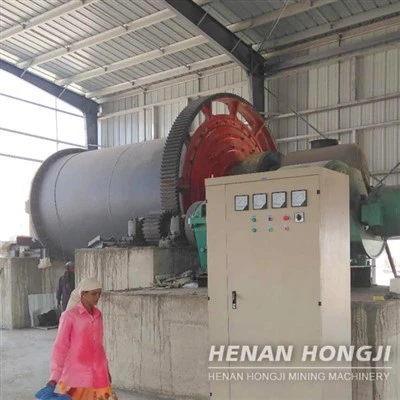
Now, how the sawdust moves inside the kiln. The rotary kiln’s a big, slightly tilted drum, right? It turns slowly, usually 1-5 RPM, so the sawdust tumbles as it moves from the inlet to the outlet. That tumbling is crucial—it exposes every particle to the hot air, so moisture evaporates evenly. But here’s a hack: add lifter flights inside the drum. Our standard dryers come with these, but for sawdust, we use “curtain lifters” that lift the sawdust up and let it fall in a thin curtain through the hot air. No clumping, every particle’s getting air. I’ve seen customers who skipped the flights end up with half-wet sawdust at the outlet, even if temp and feed rate were perfect. Don’t cut corners on those flights.
Wait, what about exhaust air? A lot of folks forget to manage what comes out of the dryer. The exhaust has moisture and fine sawdust particles, so you need a dust collector—baghouse or cyclone, whichever works for your scale. If you don’t capture that dust, two problems: first, you’re losing sawdust (that’s lost money!), and second, that fine dust builds up in the exhaust system, which is a fire hazard. We always recommend installing a cyclone pre-collector before the baghouse for sawdust, since it catches the big particles, so the baghouse doesn’t get clogged as fast. Also, make sure your exhaust fan’s sized right—too weak, and air doesn’t circulate; too strong, and you’re pulling too much heat out of the kiln, wasting energy.
Let’s talk about common issues, because even if you follow all this, stuff goes wrong. First, uneven MC—some parts dry, some don’t. That’s almost always a feed rate problem, or clumpy feed, or broken lifter flights. If you’re seeing that, check the feeder first, then the flights. Second, dust buildup—again, probably exhaust flow or not prepping the feed right. If you’re feeding clumps, the fine dust gets released when the clumps break, so more buildup. Third, energy waste—if your fuel bills are through the roof, check your insulation. Our dryers come with rockwool insulation on the drum, but if it’s damaged, heat escapes. Also, don’t overheat the inlet temp—we see customers cranking it up “to speed things up” and wasting tons of fuel for no reason.
Wait, let’s make this personal. Last year, we worked with a small biomass pellet plant in Ohio. They were using a cheap, generic dryer, and their sawdust was coming out with 20% MC—way too high for pellets, so they were wasting 15% of their product every month. They switched to our rotary kiln dryer, and adjusted their feed rate to 2 tons per hour, inlet temp 220°C, added the curtain lifters, and now their output is 10% MC, no wasted sawdust, and their energy bill dropped 22%. That’s the stuff we live for—customers seeing real results, not just specs on a page.
Now, let’s wrap this up with what matters if you’re actually in the market. Drying sawdust in a rotary kiln dryer isn’t just “run the machine”—it’s prepping the feed, calibrating feed rate, controlling temp, using the right internal parts, and managing exhaust. But here’s the thing: every operation’s different. If you’re dealing with pine sawdust vs. oak vs. wood chips mixed with sawdust, the numbers shift a little. That’s why generic advice only goes so far.
If you’re looking to upgrade your dryer, or even set up a new drying line for sawdust, we don’t do one-off products—we work with you to size the kiln, adjust the setup for your specific sawdust, and even train your operators on the basics. We’ve got install teams that can come on-site to tweak the machine once it’s running, so you don’t have to guess if you’re doing it right. No sales pitches here, just guys who’ve been building these dryers for years, know the ins and outs of sawdust drying, and want to help you get the most out of your material.
If you’ve been struggling with uneven dryness, high energy costs, or explosion risks with your sawdust drying, hit us up to chat through your setup. We can walk you through what would work for your operation, no pressure. Just tell us what kind of sawdust you’re working with, your desired output MC, and your hourly capacity, and we can point you in the right direction.
Crushing Equipment References:
- ASTM E876-15, Standard Test Method for Moisture Content of Wood and Wood-Base Materials
- OSHA Dust Explosion Prevention and Protection Guidelines, 29 CFR 1910.94
- Rotary Kiln Dryer Design Principles for Biomass Drying, Journal of Industrial and Engineering Chemistry, 2021
- Sawdust Drying Efficiency: Impact of Feed Preparation and Heat Transfer, Biomass and Bioenergy, 2019
Henan Hongji Mine Machinery Co., Ltd.
Henan Hongji Mine Machinery Co., Ltd. is one of the most experienced rotary kiln and dryer manufacturers and suppliers in China, featured by quality products and low price. Please rest assured to buy durable rotary kiln and dryer in stock here and get quotation from our factory. Also, 2 years warranty is available.
Address: Intersection of Taojia Road and Wenbo Road, Xingyang, Zhengzhou City
E-mail: sale3@hongjigroup.com
WebSite: https://www.chinahongjimining.com/
