Hey there, if you’ve ever tried to piece together a steel frame building, you’ve probably wondered this question at least once: What’s the maximum span IBC allows for steel frame joists? As someone who’s been deep in the IBC steel frame game for years—helping builders, contractors, and even homeowners figure out the right specs for their projects—I get why this matters so much. Mess up the span, and you’re looking at sagging floors, safety risks, or even code headaches that’ll slow your whole build way down. Let’s break this down like we talk shop in the warehouse, no boring jargon overload, just real info you can actually use. IBC Steel Frame
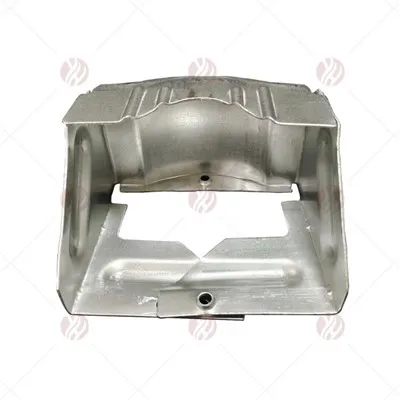
First off, let’s get one thing straight: IBC stands for the International Building Code, right? It’s the rulebook most of the US (and a bunch of other countries that model their codes after it) follows to keep buildings safe. Now, when it comes to steel frame joists, the IBC doesn’t just pull a number out of thin air. The maximum span depends on a ton of variables that aren’t one-size-fits-all. That’s the part most people miss when they’re googling “max steel joist span IBC”—they think there’s a single answer, but nope, it’s all about what you’re putting on the joists (that’s the load), what kind of steel you’re using, how deep the joists are, and even how far apart they’re spaced.
Let’s start with the basics of IBC steel frame joist loads, because that’s the foundation. The code splits loads into two main types: dead load and live load. Dead load is the weight of the building stuff itself—like the subfloor, drywall, insulation, all that. Live load is the stuff that moves—people, furniture, fridges, even that big toolbox you drag around the garage. For residential projects, IBC usually sets a minimum live load of 40 pounds per square foot (psf) for floors. For commercial spaces like offices, that jumps to 50 psf, and stuff like lobbies or assembly areas go even higher, like 100 psf. If you’re building a deck attached to a house, that’s another load category entirely, usually 60 psf. So if you’re working on a commercial office, your max span is gonna be shorter than if you’re doing a small guest bedroom. Makes sense, right? More weight = less space between supports.
Next up, the joist specs themselves. IBC works with engineered values here, not just generic steel. The main things that play are the joist’s depth, its gauge (how thick the steel is), and its material strength. Most standard I steel frame joists (the ones we supply, by the way) come in depths from 6 inches up to 14 inches for common residential use, and deeper for commercial. Thicker steel (lower gauge number—like 14-gauge is thicker than 18-gauge) holds more weight, so a 14-gauge 12-inch deep joist will span farther than an 18-gauge 6-inch deep one. Also, the grade of steel matters—most builders use A36 steel for standard stuff, which has a yield strength of 36,000 psi. If you go with higher-strength steel like A992 (50,000 psi), you can get longer spans, but that’s usually for bigger commercial jobs, not residential.
Now, let’s talk about the actual numbers, because that’s what everyone’s here for. Let’s stick to residential first, since that’s where most folks start. For a standard 40 psf live load, using 18-gauge steel frame joists spaced 16 inches apart (the most common spacing for floors), IBC’s max span for a 6-inch deep joist is around 10 feet. If you bump the depth to 8 inches, that jumps to 12 feet, 10 inches. 10-inch deep gets you 15 feet, 6 inches, and a 12-inch deep 18-gauge spans up to 18 feet, 4 inches. Now, if you use 16-gauge steel instead of 18, those numbers go up. 16-gauge 10-inch deep at 16 inches on-center can go 17 feet, 2 inches, and 12-inch 16-gauge hits almost 21 feet. Space them a little farther apart, like 24 inches, and those spans drop—18-gauge 10-inch at 24 inches is only 13 feet, 4 inches, which makes sense because they’re supporting less points of contact.
For commercial, let’s take that 50 psf live load office space, same 16-inch spacing. 12-inch deep 18-gauge would max out around 16 feet, 2 inches, and if you go 14-inch deep, that jumps to almost 20 feet. If you’re doing something heavier, like a storage area with 125 psf live load (for those big warehouse-style sheds or commercial storage rooms), you’re gonna need thicker steel and deeper joists. I’ve worked on a small storage project where we used 14-gauge 14-inch joists at 16 inches on-center, and IBC’s max span there was just over 17 feet. No way you could go longer without beefing up the steel or narrowing the spacing.
Wait, but hold on—there’s a big rule most people forget: IBC also has deflection limits. That’s how much the joist bends under load, right? The code says floors can’t bend more than 1/360 of the span length for live loads, to keep that “no springy floor” feel. If your joist bends too much, even if it’s holding the weight, it’s not up to code. That’s why a lot of the span numbers aren’t just about weight capacity—they’re about making sure the floor doesn’t feel like a trampoline. For example, a really long, shallow joist might hold the dead and live weight, but bend so much when you walk across it that it fails the deflection test. That’s why we always go by the IBC’s span tables, which factor both load and deflection—no cutting corners here.
As your go-to IBC steel frame supplier, I can tell you this: we don’t just sell joists and send you off. We give you the IBC-aligned span tables tailored to your exact project specs because one size never fits all. Last year, a contractor came to us with a residential project for a 20-foot wide great room—he thought he could use 8-inch joists, but when we ran the numbers with IBC, 8-inch 18-gauge at 16 inches maxed out at 12 feet, which would have meant a middle support post in his beautiful open floor. We suggested 12-inch 16-gauge joists, which hit 18 feet, so he could keep that open space without posts, all code-compliant. That’s the stuff we do—help you avoid those “wait, that’s not allowed” moments.
Another thing to note: if you’re using trussed steel joists (common for longer spans), IBC has different specs, but the same rules apply—depth, gauge, spacing, load. Trusses are made of smaller steel members connected together, so their span is way longer—we’ve got trussed joists that go 30+ feet for commercial buildings, but that’s with engineered designs, not just off-the-shelf ones. Always make sure trusses are engineered by a licensed professional if you’re going for spans over 20 feet, because the IBC wants that extra check for bigger builds.
Wait, what about decks? A lot of people mix up floor joists and deck joists, but IBC has separate specs for exterior decks. For a residential deck, usually 60 psf live load, the max span for a 2×10 wood joist is like 15 feet, but steel deck joists are way stiffer. A 10-inch steel joist at 16 inches on-center can span up to 18 feet for a deck, which is a big difference. But again, check the deck section of the IBC, not just the floor section—easy mistake to make.
Let’s also talk about common mistakes we see builders make with IBC steel joist spans. First, they assume the span from a old wood frame applies to steel—nope, steel is stronger, but not by that much, and deflection is a bigger issue for steel sometimes because it’s stiffer but still bends under long spans. Second, they skip the IBC span tables and guess based on what a buddy used on a different project—buddy’s project might have a lower load, different spacing, or deeper joists, so copying that could get you in trouble. Third, they ignore building codes specific to their state or city—some areas adopt the IBC but add local amendments, so always cross-check with your local building department, not just the national code.
As your IBC steel frame supplier, we make this easy. Every batch of joists we provide has the necessary engineering data aligned with IBC requirements. We’ll ask you a few quick questions: what’s the span length you need? What’s the live load? Spacing? And we’ll point you straight to the right IBC-aligned specs, so you don’t have to dig through hundreds of pages of code. No guesswork, no code violations, no re-doing parts of your build because you got the span wrong.

At the end of the day, IBC’s maximum span for steel frame joists isn’t a random number—it’s a safe, calculated limit based on all the factors that affect how your building holds up. Whether you’re doing a small backyard build, a new home, or a commercial space, getting that span right is non-negotiable. If you’re planning a project and need to figure out the right joist size, gauge, and span that’s fully IBC-compliant, reach out to us. We’re here to walk through your needs, answer all your questions, and make sure you’ve got exactly what you need to build safe, code-compliant spaces.
IBC Steel Frame References: International Building Code (IBC), 2021 Edition; Steel Framing Alliance (SFA) Engineering Data for Cold-Formed Steel Joists; American Institute of Steel Construction (AISC) Steel Construction Manual, 15th Edition.
Zhenjiang Yuanhai Packaging Co., Ltd.
We’re well-known as one of the leading IBC steel frame manufacturers and suppliers in China, featured by quality products and good price. Please rest assured to buy high-grade IBC steel frame for sale here from our factory. We also accept customized orders.
Address: No. 9, Danwu Road, Dantu District, Zhenjiang City
E-mail: chin_john@msn.com
WebSite: https://www.yhibc.com/
