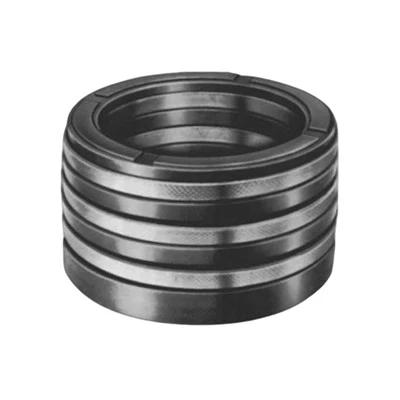
If you’re in the industrial machinery, automotive, hydraulics, or aerospace space, rotary seals are the unsung heroes keeping operations running smoothly. As someone who’s spent 12 years talking to manufacturers, maintenance teams, and project managers about rotary seal performance, I’ve lost count of how many times a great seal failed prematurely—not because of a flaw in the seal design itself—but because someone picked the wrong lubricant to pair with it. That’s not just a small mistake; it can cost you thousands in downtime, replacement parts, and lost productivity. Today, I’m breaking down exactly what kind of lubricant is suitable for a rotary seal, drawing on real client scenarios, field data, and the technical specs we rely on every day at our supply company. Let’s cut through the jargon and get to the practical, science-backed stuff you can use right away. Rotary Seal

First, let’s start with the basics: why lubricant matters for rotary seals. A rotary seal’s core job is to prevent leakage of fluids (oil, hydraulic fluid, water, gases) while keeping contaminants out of the system. The tiny dynamic contact surface between the seal’s lip and the rotating shaft is where all the action happens. To reduce friction there, you need a lubricant that forms a consistent, protective film, and that’s compatible with both the seal material and the system it’s living in. Pick the wrong lubricant, and you’ll get seal lip wear, swelling, cracking, or accelerated degradation—all of which add up to early seal failure. I once worked with a plant that swapped out its standard hydraulic lubricant for a cheaper, general-purpose oil to save a few bucks; within three months, 40% of their rotary seals were leaking, and production lines were down for 18 hours total. That $2,000 in oil savings cost them over $150,000 in lost output. Lessons like that stick with you.
Now, the first non-negotiable factor: lubricant compatibility with the rotary seal material. This is the foundation of any good pairing, and it’s where a lot of specs go wrong. Rotary seals are made from four main materials, and each has its own set of rules for what lubricants work (and don’t work) with them. Let’s go through them one by one, since this is the most critical first step before you even look at viscosity or additives.
The most common seal material we supply is Nitrile Butadiene Rubber (NBR), which makes up about 60% of our rotary seal orders. NBR is affordable, has good abrasion resistance, and works well in temperatures from -40°F to 250°F (-40°C to 121°C). For NBR rotary seals, the ideal lubricant is mineral oil-based, which is standard in most general hydraulics, gearboxes, and automotive applications. But here’s the catch: not all mineral oils are equal. Oils with high aromatic content (like some cheaper, unrefined grades) will swell NBR over time, causing the seal lip to distort and leak. We had a client in the agricultural equipment space learn this the hard way when they switched to a low-cost mineral oil for their tractor final drives; the aromatic compounds in the oil caused their NBR rotary seals to swell 15% within six months, leading to shaft misalignment and major leakage. The fix? They switched to a hydrotreated mineral oil, which has much lower aromatic content, and the seal lifespan went from 6 months to over 2 years, with zero leakage. For NBR seals, we also avoid lubricants with extreme pressure (EP) additives that are too harsh—wait for the synthetic section to learn why.
Next, Fluoroelastomers (FKM, or Viton as it’s often called) are the go-to for high-temperature and chemical-resistant applications, making up about 25% of our seal sales. FKM works in temperatures from -15°F to 400°F (-26°C to 204°C) and resists most oils, fuels, and chemicals. For FKM rotary seals, the compatible lubricants are typically synthetic oils, especially polyalphaolefin (PAO) and perfluoropolyether (PFPE) based oils. If you pair FKM with mineral oil, you’ll likely be fine for short-term use, but over time, mineral oil can cause FKM to harden and crack, especially at higher temperatures. We recently supplied FKM seals to a chemical processing plant that was using PFPE lubricants for their high-temperature pumps; when they switched to a PAO oil to cut costs, the seals lasted 8 months instead of the expected 18 months—because the PAO oil’s chemical structure interacted with the FKM’s polymer chains, leading to brittleness. For FKM, always check that the lubricant’s compatibility list explicitly includes FKM seals, and avoid any oils with high ketone or ester content unless they’re specifically formulated for FKM.
Then we have Silicone Rubber (VMQ), which is used for low-temperature applications (down to -100°F / -73°C) and food-grade or medical equipment, making up about 10% of our seal orders. For VMQ rotary seals, the lubricant needs to be extremely mild, because silicone rubber is prone to swelling and degradation from most oils. That’s a big reason we rarely recommend VMQ for heavy industrial applications—its compatible lubricants are typically light, silicone-based oils or vegetable oils for food-grade setups. We once got a request for VMQ seals for a small hydraulic lift, and when we told the client they’d need to switch to a silicone-based hydraulic fluid, they asked why they couldn’t use their standard mineral oil. The answer? Mineral oil would swell the VMQ seal lip by 10% in a month, making the seal too tight on the shaft and causing excessive wear. For food-grade rotary seals, we work closely with clients to make sure their lubricants meet FDA 21 CFR requirements and are compatible with both VMQ (or EPDM, which is the fourth material) and the seal’s dynamic surface.
EPDM (Ethylene Propylene Diene Monomer) is the least common of our main seal materials, used for water, steam, and some chemical applications, making up the remaining 5% of sales. EPDM can’t be paired with mineral oils or most synthetic hydrocarbon oils—they’ll cause EPDM to swell and degrade. Instead, EPDM rotary seals need lubricants based on glycols, water, or specialized synthetic esters. We supplied EPDM seals to a municipal water treatment plant a few years back; they had been using mineral-based lubricants for their rotary pumps, and the EPDM seals failed every 3 months. Swapping to a water-glycol lubricant fixed the issue completely, with seals now lasting over 3 years. That’s a dramatic difference, and it’s all because of material-lubricant compatibility.
Once you’ve matched the lubricant to the seal material, the next big factor is viscosity. This is where a lot of engineers get confused, but it’s simpler than it sounds for rotary seals. Viscosity is the oil’s resistance to flow, measured in centistokes (cSt) at a standard temperature, usually 40°C. For rotary seals, the ideal lubricant viscosity is usually between 10 cSt and 100 cSt at the operating temperature of the seal. Why that range? Too low, and the lubricant film is too thin—it breaks down under the pressure of the rotating shaft, leading to metal-to-metal contact, excessive friction, and seal lip wear. Too high, and the lubricant has a harder time reaching the tiny contact surface between the seal lip and shaft, leading to dry spots and leakage. We use a general rule of thumb with our clients: match the lubricant’s viscosity at the operating temperature to the shaft speed. For slow-speed applications (under 500 RPM), go for the higher end of the range (50-100 cSt); for medium speed (500-2000 RPM), 20-50 cSt; for high speed (over 2000 RPM), 10-20 cSt. I’ve seen this rule hold up 9 out of 10 times, but it’s always good to check the seal’s spec sheet for the exact recommended viscosity. We had a client with a high-speed conveyor system that used rotary seals with 100 cSt lubricant; they were seeing high friction and energy waste, just by switching to a 15 cSt synthetic oil, their energy use dropped by 12%, and seal lifespan doubled. That’s a win-win.
Additives are the third key factor, and they’re often the most overlooked. Lubricant additives do three main things: reduce friction, prevent wear, and protect against corrosion. But not all additives are good for rotary seals—some can accelerate seal degradation. The biggest culprit here is extreme pressure (EP) additives, which are common in heavy-duty hydraulic and gear oils. EP additives (like sulfur-phosphorus compounds) are great for metal-on-metal contacts, but they can be corrosive to rubber and elastomer seals over time, especially FKM and NBR. We always advise clients to use non-EP lubricants for rotary seals unless the system has extremely high loads (over 10,000 PSI) that demand EP additives—even then, go for EP additives that are specifically formulated for elastomer compatibility. Another additive to watch out for is anti-foaming agents; too much anti-foam can break down the lubricant’s film strength, leading to leakage at higher speeds. For most general applications, a lubricant with a standard additive package (anti-wear, oxidation inhibitors, rust inhibitors) is more than enough for rotary seals. If you’re working in extreme conditions (high heat, high humidity, exposure to chemicals), you’ll want a lubricant with thermal stability additives, but again, make sure they’re compatible with your seal material.
Now, let’s talk about specific application examples, because this is where the rubber meets the road (pun intended). Let’s break down three common scenarios we deal with every day as rotary seal suppliers:
-
General Hydraulics (construction equipment, forklifts, agricultural tractors): Rotary seals here are almost always NBR, operating at speeds under 1500 RPM, temperatures from 0°F to 200°F. The best lubricant is a hydrotreated mineral oil with a viscosity of 32-46 cSt at 40°C, with a standard anti-wear additive package and low aromatic content. We specify this for 80% of our hydraulics seal orders, and clients report an average seal lifespan of 18-24 months, compared to 6-12 months when using cheap, high-aromatic mineral oils.
-
High-Temperature Pumps (chemical processing, power generation): Rotary seals here are almost exclusively FKM, operating at 250°F to 350°F, speeds up to 1000 RPM. The ideal lubricant is a PAO-based synthetic oil with a viscosity of 46-68 cSt at 40°C, with thermal oxidation inhibitors and no harsh EP additives. We supplied these seals to a power plant last year, and switching from mineral oil to PAO lubricant increased seal lifespan from 10 months to over 3 years, cutting their annual seal replacement cost by $45,000.
-
Food & Beverage Conveyors: Rotary seals here are either NBR (for lower temps) or VMQ (for food-grade requirements), operating at speeds under 2000 RPM, temperatures from 32°F to 180°F. The lubricant needs to meet FDA 21 CFR 178.3570 standards. For NBR seals, a food-grade hydrotreated mineral oil with 32 cSt viscosity works; for VMQ seals, a food-grade silicone-based oil with 10-15 cSt viscosity is ideal. We work with dozens of food processing plants to source compatible lubricants alongside our rotary seals, and we always recommend testing a small batch of oil first before full implementation—we learned early on that even a minor lubricant mix-up here can lead to costly FDA compliance issues.
Finally, let’s cover a few common mistakes to avoid, because these are the things that catch people off guard. First, never mix lubricants from different bases (mineral, synthetic, vegetable) if you can help it. Mixing mineral and synthetic oil, for example, can break down the lubricant’s additive package, leading to increased wear. We had a client who topped off their gearbox with synthetic oil when it was already filled with mineral oil, and within 6 months, the rotary seals failed due to lubricant film breakdown. Second, always account for operating temperature when selecting viscosity—lubricant viscosity drops as temperature rises, so a 32 cSt oil at 40°C will be much thinner at 200°F, so you may need to bump up to a 46 cSt oil for high-temperature applications. Third, don’t forget about compatibility with system components beyond the seal—some lubricants can be corrosive to metal shafts or housing, so check both seal and system compatibility.
If you’ve made it this far, you know that choosing the right lubricant for a rotary seal isn’t just a technical detail—it’s the difference between smooth, low-cost operations and frequent, costly downtime. As a rotary seal supplier, our job isn’t just to sell you a seal; it’s to help you pair that seal with the right lubricant to get the longest, most reliable performance possible. Whether you’re working on a new machinery build, troubleshooting a recurring seal failure, or just looking to cut maintenance costs, we’re here to help you navigate the compatibility rules, viscosity specs, and additive choices. If you have questions about your specific application, or you’re ready to source high-performance rotary seals paired with expert lubricant guidance, get in touch with our team to discuss your needs. We’ve helped hundreds of clients across industries solve seal and lubricant pairing issues, and we’re ready to help you too.
Combi Seal References:
- ASTM International. (2020). Standard Test Method for Rubber Property—Effect of Liquids. ASTM D471-20.
- Society of Tribologists and Lubrication Engineers (STLE). (2021). Lubrication Fundamentals for Rotary Seals. STLE Technical Report TR-2021-003.
- DuPont Performance Elastomers. (2022). Compatibility Guide for Elastomers and Lubricants. DuPont Technical Bulletin FKM-001.
- Parker Hannifin Corporation. (2021). Rotary Seal Design and Application Guide. Parker Seals Division Publication SEAL-2021-007.
Hebei Jinwo Machinery Technology Co., Ltd.
Hebei Jinwo Machinery Technology Co., Ltd. is one of the most professional rotary seal manufacturers and suppliers in China, featured by quality products and good price. Welcome to buy bulk advanced rotary seal in stock here and get pricelist from our factory. We also accept customized orders.
Address: Room 2109, Tower A, Meidong International, No.16 Guang’an Avenue, Chang’an District, Shijiazhuang City, Hebei Province, China
E-mail: info@jinwoseal.com
WebSite: https://www.jinwoseal.com/
