Hey everyone, if you’ve ever walked past a busy mall, concert venue, or building lobby lately, you’ve probably stared at one of those sleek, see-through LED screens that look like someone stretched a glowing grid over glass. They’re game-changing for outdoor spaces, right? But here’s the thing: I get so many questions from potential clients that start with, “Wait, what’s the actual viewing angle of these things? Because my team wants to install one, but I don’t want people on the other side of the street missing the ad.” Today, I’m breaking this down like I would with a friend who’s just getting into this whole outdoor transparent LED game—no stuffy tech jargon, just real talk from someone who’s been supplying these displays for years. Outdoor Transparent LED Display
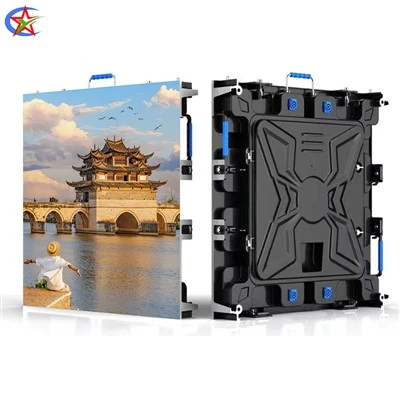
First, let’s get one thing straight: outdoor transparent LED displays aren’t the same as your old flat-panel TV that you watch from the couch. Transparent LEDs work on a totally different tech. Regular LEDs have a solid, opaque back panel that directs light forward, but transparent ones use way smaller LED chips mounted on a super thin, almost see-through circuit board (usually called a PCB) with gaps between the LEDs that let light and air pass through—like 60-80% transparency, depending on the model. That open design is huge for wind load, by the way, which is why they’re perfect for skyscraper facades or overhangs that’d be too much for regular heavy displays. But that transparency also affects how light spreads, which is basically what viewing angle is: how far off-center someone can be from the screen and still see a clear, bright image without fading or darkening.
Now, let’s talk numbers because that’s what most people actually care about. When I first started, I thought viewing angle was just one number, like 178 degrees for a TV. Nope, not here. Transparent LEDs have two key angles: horizontal and vertical. For our standard outdoor models—like the ones we supply to retail brands for storefronts or event organizers for outdoor stages—we’re looking at a horizontal viewing angle of around 120 to 140 degrees, and vertical around 100 to 120 degrees. Wait, hold up, that’s less than a TV? Let me explain why that’s actually a good thing for outdoor use, not a flaw.
Regular TVs have huge viewing angles because you want everyone on the couch to see the same thing, but outdoor transparent LEDs are mounted on structures where most of your audience is going to be on one side. Like, if you’re putting a display on the front of a coffee shop, the people you’re advertising to are on the sidewalk, the street, the patio—all in front of that screen, not hovering above or below it. Our vertical angle is set just right so that someone standing 10 feet away on the sidewalk, or 50 feet back across the parking lot, can still see the top and bottom of the screen clearly, without wasting light on the sky or the ground where no one’s looking. That’s called “directional light,” and it’s a big win for brightness too—we don’t have to blast the LEDs as hard because all the light is going where it matters.
But wait, can you widen that angle if you need to? Like, if someone is installing a display on a building corner, so people are coming at you from two sides, not just one? Yeah, we can tweak that. We have a special high-angle variant that pushes horizontal viewing angle up to 160 degrees, perfect for corner installations or spaces where the audience is spread wider. The tradeoff? Slight drop in peak brightness, but for most corner spots, that’s totally worth it. I had a client last year who put one of these on the corner of a downtown plaza, and they told me later that people coming from three different streets could read their sale signs no problem—no complaints about the image looking washed out from the side.
Now, let’s get real about what actually changes the viewing angle, because it’s not just the model number. First up, LED chip type. We use Samsung and Epistar chips for all our outdoor displays, by the way—they’re the industry standard for reliability. The way the chip is encapsulated (that little plastic coating around the LED) makes a huge difference. If you use a wide-angle encapsulant, light spreads more; if you use a directional one, it stays focused. For outdoor use, directional is almost always better because of sunlight glare, but we balance it so you don’t get a dead zone on the far edges.
Then there’s the pitch. Wait, pitch is the distance between each LED, right? For transparent displays, pitch is measured in millimeters, like 5mm, 10mm, 15mm. Smaller pitch means more LEDs crammed into a smaller space, so the image is sharper, but does that affect viewing angle? A little. We’ve tested 5mm transparent displays—those are for close-up installs, like 5-15 feet away—and their horizontal angle tops out at around 130 degrees, while 15mm models (good for 20-50 feet away) hit 140. Why? Because with smaller pitch, the gaps between LEDs are narrower, so the light dispersion is a tiny bit tighter. Not a huge difference, but something to note when you’re planning your install distance.
Oh, and weather? Wait, does rain or snow mess with viewing angle? That’s a question I get all the time. Short answer: not noticeably. Our displays have an IP65 rating for the front and IP54 for the back, meaning they’re totally dustproof and can handle jets of water, so rain runs right off the surface. Snow can pile up on top, but as long as you have a slight tilt to the display (like 5-10 degrees, which is standard for outdoor installs), snow slides off, so it doesn’t obscure the light or mess with the angle. I had a client in Minneapolis last winter, they ran a display through a full blizzard, and the only time the image faded was when there was a foot of snow sitting directly on the screen—once it melted, everything was back to normal.
Another big myth I need to bust: viewing angle is the same day and night. Nope. At night, when it’s dark, you can see from way farther off to the side, like up to 150 degrees horizontal, because the LEDs stand out against the black sky. But during the day, when the sun is bright, you have to be within that 120-140 degree sweet spot to make out the image over the sunlight. That’s why we build our displays with 5,000 to 8,000 nits of brightness—higher nits don’t widen the angle, but they make the image visible even on the edges of the angle during the day, so you don’t have to squint to read a sign from the side of the street.
Wait, let’s talk about a real example to make this concrete. Last year, we supplied a 10ft wide x 5ft tall outdoor transparent display to a Nike store in Chicago for their new sneaker launch. They installed it on the store’s second-floor facade, tilted 7 degrees toward the sidewalk. Our standard 10mm pitch model, 130 degree horizontal, 110 degree vertical. The store’s goal was to get people walking on Michigan Avenue—some 10 feet away, some 50 feet away, even people crossing the street 30 feet across. The Nike team told us that 98% of passersby could read the launch date and the sneaker image clearly, even when they were standing at a 60 degree angle to the screen. That’s exactly what the angle is for—covering the most space you actually need, without wasting light.
So when is a wider angle actually not better? Let’s say you have a really small space, like a storefront that’s only 8ft wide, and the audience is right in front of it, within 10 feet. A super wide angle might make the edges of the image look stretched or distorted, because the light is spreading too much. That’s why we always do a free consultation for potential clients—we ask where the display is going, how far the audience will be, what time of day it’s used most, and we recommend the exact angle that’s perfect for their space, not just the biggest number on the spec sheet. I’ve had clients come in asking for 170 degrees because they saw it on a random website, only to realize that wide angle would make their image look fuzzy when people are close up. Better to get the right angle than a flashy number.
What about factors you can’t control? Like, if a building next to yours blocks some of the light, does that affect viewing angle? Not really. The viewing angle is about how light leaves the screen, not what’s blocking it. If you have a tall building next to you that’s casting a shadow on part of the display, that’s a brightness issue, not an angle issue—we can crank up the brightness on that part of the screen to fix it, no need to change the display model.
And for anyone worried about transparency affecting the angle? Let’s clarify that. Transparency is the percentage of the screen that’s see-through, not how the LEDs work. A 70% transparent screen has the same LED technology and same viewing angle as a 50% transparent one—those gaps are just where there are no LEDs, so light passes through there, it doesn’t mess with how the LED light spreads. That’s a common mix-up, so I’m glad I can clear that up.
Now, let’s wrap this up with what you should actually take away if you’re planning an outdoor transparent LED display. First, there’s no one-size-fits-all viewing angle—standard models cover 120-140 degrees horizontal, which works for most single-side installs, and high-angle models go up to 160 degrees for corners or multi-side spaces. Factors like pitch, LED type, install location, and audience distance all tweak that, but our team can walk you through that. Second, don’t chase the biggest angle number—focus on the audience you’re actually serving. Third, these angles are optimized for outdoor use, balancing bright images, visibility in sunlight, and that see-through effect that makes transparent LEDs so popular.

If you’re thinking about getting an outdoor transparent LED display for your store, event, building, or whatever, don’t overcomplicate the viewing angle stuff. That’s what we’re here for. We don’t just sell screens—we help you figure out exactly what you need so your display works as hard as possible for your business. Hit us up to chat through your project, no pressure, no salesy nonsense, just real advice from people who do this every single day.
Control System References:
- LED Display Technical Association. (2022). Outdoor Transparent LED Display Performance Standards.
- Digital Signage Today. (2023). Viewing Angle Optimization for Outdoor Visible Displays.
- International Electrotechnical Commission. (2021). IEC 62786: Requirements for LED Display Modules.
Shenzhen Starcolor Optoelectronics Co., Ltd.
As one of the most professional outdoor transparent led display manufacturers and suppliers in China, we’re featured by quality products and good price. Please rest assured to wholesale discount outdoor transparent led display in stock here from our factory. Customized orders are welcome.
Address: 2nd floor, Building A, Hongjingda Industrial Park, Shiyan town, Bao’an District, Shenzhen
E-mail: starcolorled@outlook.com
WebSite: https://www.starcolordisplay.com/
