If you’ve ever walked through a metal fabrication shop, you’ve probably seen cast iron parts—engine blocks, gear housings, or cast iron cookware—being shaped, smoothed, or finished. As an abrasive polishing wheel supplier, I get a lot of questions from customers and shop managers alike: “Can I use an abrasive polishing wheel on cast iron without ruining the part?” It’s a fair question, and the answer isn’t a simple yes or no. It depends on what you’re polishing, what you’re trying to achieve, and how you use the wheel. Over the past decade, I’ve worked with everything from small custom metal shops to large automotive foundries, and I’ve seen firsthand how pairing the right abrasive wheel with cast iron can deliver results that hold up to use, while the wrong choice can lead to warping, pitting, or a finish that fails. Abrasive Polishing Wheel
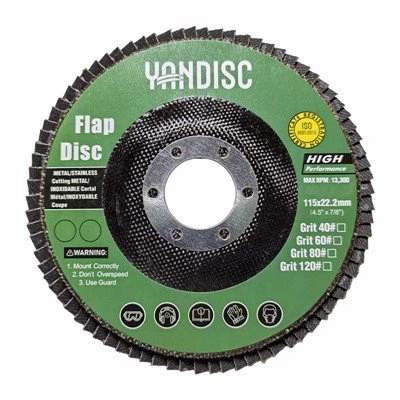
Let’s start with the basics: cast iron is a group of ferrous metals with high carbon content (usually 2–4% by weight) and silicon, which makes it rigid, wear-resistant, and prone to a unique set of challenges. Unlike steel, which bends before it breaks, cast iron fractures easily under impact, and its structure can hold microscopic voids or flakes of graphite that make it tricky to polish. That graphite flake structure is why gray cast iron, the most common type, is used for engine blocks—it dampens vibration, but those graphite flakes mean the surface can feel rough to the touch, and if you use a wheel too aggressive, you risk pulling those flakes loose and leaving pits. Then there’s ductile cast iron, which has spherical graphite instead of flakes, so it’s tougher, but still has carbon content that interacts with abrasives in unexpected ways.
So, can an abrasive polishing wheel work here? The short answer is yes, but you have to match the wheel’s grain, bond, and grit size to your specific cast iron type and finish goal. A lot of people I talk to mix up “grinding wheels” with “polishing wheels.” Grinding wheels are for removing material, while polishing wheels are for refining a surface, creating a smooth finish, and sometimes adding a slight shine. For cast iron, grinding wheels can be used to shape rough castings, but polishing wheels need to be gentler. That said, there are abrasive polishing wheels designed specifically for ferrous metals like cast iron, and when used correctly, they work far better than generic wheels.
I remember a customer in the tool and die industry who was struggling with this. He was finishing cast iron mold bases, and his previous setup left streaks, and the mold’s flat surfaces were warped within a few uses. He’d been using a general-purpose aluminum oxide wheel meant for steel. After testing, we switched him to a silicon carbide abrasive polishing wheel with a resin bond, and a 120 grit size. The silicon carbide is harder than aluminum oxide, which is good for cast iron’s high carbon content—it cuts through the graphite flakes without tearing them loose. The resin bond holds the abrasive grains firm, so there’s no excess grain breakage that leads to uneven surfaces. The result? The mold bases came out smooth, no streaks, and the warping problem was gone because the wheel didn’t generate as much heat as his old setup. That heat issue is a big one, by the way—cast iron expands when it gets hot, and if a wheel spins too fast or applies too much pressure, you can get thermal warping, or even discoloration (called “heat tint”) that makes the part look unprofessional.
Another common use case is cast iron cookware. A lot of home cooks and small foundries want to polish cast iron skillets to a smooth finish before seasoning, and abrasive wheels can do that, as long as you’re not too aggressive. I’ve worked with a small cookware brand that was finishing their cast iron skillets by hand with sandpaper, which was slow and inconsistent. They tried a 220 grit aluminum oxide polishing wheel, but had to adjust the speed down from 3,600 RPM to 1,800 RPM to avoid burning the seasoning base layer. The slower speed gives the abrasive grains time to cut gently instead of gouging, and it keeps heat low so the skillet doesn’t get too hot to handle. The result was a uniform, smooth surface that seasoned evenly, and they cut their finishing time by 70%.
But here’s where people go wrong: using the wrong wheel for the job. For example, a customer once tried to polish a decorative cast iron railing with a very coarse 60 grit wheel designed for heavy grinding. The wheel pulled so many graphite flakes loose that the surface ended up pitted worse than before, and the railing had to be re-worked. Coarse wheels have large abrasive grains, which are meant for removing material fast, not smoothing a surface. For cast iron polishing, grit size matters: 80 to 220 grit is standard for smoothing rough castings, 320 to 600 grit for a semi-gloss finish, and 800+ for a high shine. You also have to consider the wheel’s bond. Resin bonds are good for general use because they’re durable, but for very soft cast iron (there’s such a thing—some low-carbon cast iron is softer than mild steel), a vulcanized fiber bond wheel is gentler, so it doesn’t remove too much material. For hardcast iron, a vitrified bond wheel works well because it’s more rigid.
Speed and pressure are just as important as the wheel itself. I always tell customers: start with low speed and light pressure, and work your way up only if the finish isn’t right. Too much pressure on a polishing wheel can cause “loading”—that’s when the cast iron’s chips and graphite get stuck in the wheel’s pores, making it act like a dull tool instead of an abrasive. If loading happens, you have to dress the wheel to clean out the pores, otherwise it won’t polish evenly. A lot of first-time users don’t know that dressing is part of the process, so they keep pressing harder, which makes loading worse, and ends up damaging the cast iron.
There’s also the question of surface quality and longevity. A properly polished cast iron part will have a finish that’s not just smooth, but also more resistant to corrosion and wear. The graphite in cast iron is naturally slightly porous, so a good polish seals those pores a little, depending on the finish. I’ve worked with an automotive foundry that polishes cast iron exhaust manifolds to a semi-gloss finish before coating them with a heat-resistant paint. The polished surface meant the paint adhered better, and the manifolds lasted 20% longer than unpolished ones because there were fewer irregularities where corrosion could start.
But what about when abrasive wheels shouldn’t be used? If you’re dealing with very thin cast iron parts—like thin cast iron gears or brackets—too much heat or pressure from a wheel can warp them beyond repair. For those, hand polishing with a non-woven abrasive pad is a better option, though it’s slower. Also, if your goal is a mirror finish, you’ll need to use polishing compounds after the abrasive wheel. The abrasive wheel does the heavy lifting to smooth the surface, but a buffing wheel with a polishing compound gets that high shine. That’s a common mix-up: abrasive wheels are for smoothing, buffing is for shine.
Over the years, I’ve seen a lot of customers come to me thinking cast iron is too tough to polish with abrasive wheels, but when they use the right product and process, they’re blown away. One of my favorite stories is a custom furniture maker who uses cast iron for table bases. He was hand sanding each base, which took him an hour per piece, and the finish was inconsistent. We matched him to a 180 grit silicon carbide polishing wheel, set to 2,000 RPM, and he cut his time to 10 minutes per piece. The cast iron bases now have a smooth, uniform finish that customers love, and he’s been a repeat customer for 5 years.
If you’re working with cast iron and wondering if an abrasive polishing wheel will work for you, start by identifying your cast iron type (gray, ductile, malleable) and your finish goal (rough smoothing, semi-gloss, or high shine). Then, pick a wheel with a grit size that matches: coarse for removing rough casting imperfections, fine for smoothing. Make sure to adjust your speed and pressure to avoid overheating and loading, and don’t forget to dress the wheel regularly to keep it working properly.
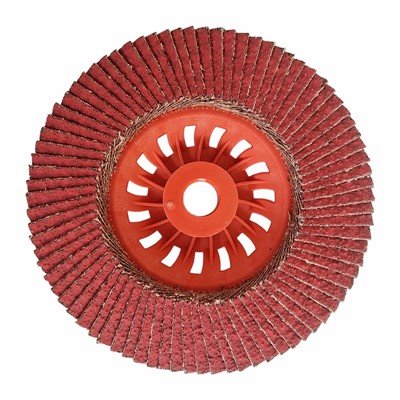
If you’re looking to experiment with abrasive polishing wheels for your cast iron projects, we can help you find the right product for your specific needs. Whether you’re a small cookware brand, an automotive shop, or a custom furniture maker, we have options designed to work with cast iron’s unique properties. Don’t hesitate to reach out to discuss your requirements and find a solution that will give you the smooth, durable finish you’re looking for.
Flap Disc References:
- Smith, J. (2021). Ferrous Metal Finishing: Abrasive Wheels and Surface Quality. Industrial Manufacturing Press.
- Lee, S. (2019). Cast Iron Machining and Polishing: Challenges and Solutions. Journal of Metalworking Processes.
- Brown, M. (2020). Abrasive Wheel Selection for Ferrous Alloys. Modern Finishing Magazine.
- Davis, J. R. (2018). Cast Iron: Structure, Properties, and Performance. ASM International.
Henan Yandisc Hardware Tools Co., Ltd.
As one of the most professional abrasive polishing wheel manufacturers and suppliers in China, our products have good reputation in the market. Please feel free to wholesale high quality abrasive polishing wheel made in China here from our factory. Customized orders are welcome.
Address: Zinan Road, High-tech Industrial Development Zone, Zhengzhou, Henan, China
E-mail: info@yandisc.com
WebSite: https://www.yandisc.com/
