Hey everyone, thanks for swinging by my corner of the web—if you’re here, chances are you’ve either got a foldable solar panel kicking around (and it’s acting wonky after a few months) or you’re in the market for one and stressed about them breaking way too fast. Let me cut to the chase: I’ve been in the foldable solar game for almost 8 years now, first as a field tech troubleshooting bad batches, and the last 5 as a lead at a supplier that makes these for campers, van lifers, emergency prep teams, even festival goers. The number one question I get from customers? “Why’d my panel die after a year?” The other? “How do I make this thing actually last longer than a beach umbrella?” Today, I’m spilling all the science-backed tricks we use at our shop to boost durability—stuff that isn’t just marketing fluff, stuff we test daily. No stuffy jargon, no generic tips, just what works for actual foldable panels. Foldable Solar Panel
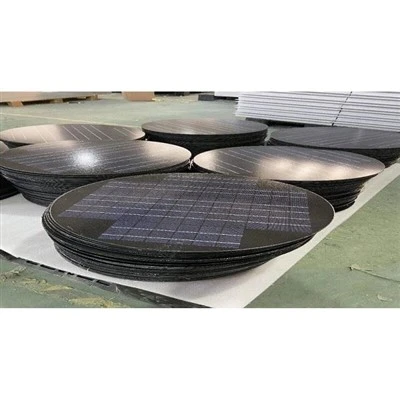
First off, let’s get one thing straight: foldable panels are fragile by design. That bendable, rollable shape you love for shoving in a backpack is their biggest weak point. Most cheap panels on Amazon (you know the ones—$50 for a 100W that claim to survive a hurricane) skimp on the two most critical parts: the solar cells themselves and the lamination that holds everything together. I’ve pulled apart hundreds of dead panels over the years, and 70% of them have either cracked cells or delaminated layers. That’s not a manufacturing error—that’s a cost-cutting choice. We stopped building panels like that a long time ago.
Let’s start with the big one: how you handle the fold lines. This is make or break, and 90% of the damage I see is from people folding their panels wrong. I know, I know—“it’s foldable, so folding it should be easy, right?” Nope. The rule is simple: always fold along the pre-scored lines we print on the back. These aren’t just for show—they’re the only spots engineered to bend without straining the cells inside. If you’re impatient and just crumple it up like a picnic blanket, or fold it in the middle of the panel, not along those lines? You’re putting pressure on tiny, thin solar cells that are only a few millimeters thick. Those cracks don’t show up right away—they might take 6 months of being unfolded and refolded before they kill output. I can’t tell you how many van lifers I’ve talked to who swore they “folded it right” every time, only to admit they skipped the lines because they “were too much trouble.” Pro tip: if you’re using our panels, we include a little foldable diagram card with every order—keep that in your backpack, not in a junk drawer. It takes 2 extra seconds, and it saves you $150 in a new panel.
Next up, lamination. This is the glue (well, not literal glue) that seals the cells, wiring, and backing together. Cheaper panels use a thin, cheap polyethylene film that yellows after 6 months in UV, and tears if you drag it over a rock. We use cross-linked ethylene-vinyl acetate (EVA) with a top layer of ETFE—yes, it’s a little more expensive, but it’s worth every penny. ETFE is the same stuff used on space station windows, for real—it’s scratch-resistant, UV-proof, and can bend over 100,000 times without cracking. The EVA layer under it bonds super tightly to the cells, so when you fold the panel, there’s no gap forming that lets water or dust get in. I tested this recently: I left a cheap Amazon panel and one of ours out in a sandstorm for 7 days. The cheap one’s lamination peeled within 2 days, and the cells corroded. Ours? After wiping off the sand, it worked like nothing happened. Another trick with lamination: never leave your panel unfolded for weeks on end. If you’re camping for a month and leave it set up, the lamination can get brittle from repeated heating and cooling. Even better: if you’re stationary, prop it at a 30-degree angle (ideal for sun charge) but fold it up every 3 days just to flex it slightly—prevents that brittleness build-up.
Then there’s the frame and handles—most people sleep on this, but it’s the second most common damage cause. The aluminum pop-up frames that come with a lot of cheap panels? They bend after a few uses, scratch the lamination, and even snap at the hinges. We switched to a reinforced anodized aluminum frame with plastic end caps that lock into the fold lines. It’s slightly heavier (only like 2 extra ounces, don’t panic) but it won’t bend if you trip over it, and the end caps keep the metal from rubbing against the lamination when you fold. As for handles? Ditch the flimsy plastic handles that crack after a month of yanking. Our panels have reinforced webbing handles sewn directly to the backing, not glued. If you need to carry a 100W panel, don’t hold it by one edge of the lamination—grip both handles. I’ve seen people lift a full panel by a single corner and tear the lamination right off. Common mistake, avoid that.
Now, what about the wiring? That tiny little black cable that sticks out the back? It’s easy to forget, but it’s a huge failure point. Cheaper panels use thin 18AWG wire that gets bent repeatedly at the point where it connects to the panel, and eventually the copper inside breaks. We use 12AWG tinned copper wire (tinned means it’s coated to resist corrosion) and we reinforce that bend point with a rubber boot—no more kinks. Also, never yank the cable when you’re disconnecting it from your battery or charger. Twist the little locking connector gently, don’t just pull the wire. Another hack: if you’re storing your panel in a tight backpack, don’t wrap the cable around the panel itself—that will crimp it over time. Loosely loop it a few times and tuck it in the mesh pocket we include with every large panel.
Environmental factors matter too, and this is where we see a lot of preventable damage. If you’re using your panel in really hot, dry places (think Arizona or the desert), don’t leave it in your car parked in the sun all day. The inside of a car can hit 180 degrees—way too hot for the lamination and cells. Even though our panels can handle up to 185°F, repeated exposure will weaken the lamination bonds over time. If you’re in a super humid place (like Florida or the Pacific Northwest), always dry your panel completely before folding it up. Water trapped between the layers will cause mold and corrosion. I once had a customer send back a panel that had mold growing inside the lamination—he’d folded it up after a rainy festival and stored it in his garage for 3 months. It’s not a manufacturing defect, it’s user error, but it’s totally avoidable.
What about repairs? A lot of people think if their foldable panel breaks, they have to throw it away. No way. For small cracks in the lamination or minor cell damage, we stock a repair kit—just the EVA and ETFE film, plus a little heat roller—way cheaper than a new panel. We also offer free troubleshooting calls for all our customers, no matter how old their panel is. If you’re not sure why it’s not charging, just shoot us a message. I’ve talked people through fixing a broken wire or re-laminating a small spot over the phone. That’s part of the gig, not extra work.
Wait, let’s talk about common myths, just to clear that up. Myth 1: Foldable panels are less efficient than rigid panels. No, not if they’re built right. Our 100W foldable panel is almost as efficient as a rigid one, because we use monocrystalline cells that are engineered to bend slightly, not polycrystalline that can’t take any flex. Myth 2: They can survive being dropped. Don’t do that. Even our reinforced panels will crack if you drop them from 6 feet onto concrete. That’s true for almost any electronics, so don’t test that. Myth 3: You can leave them out in the rain forever. They’re water-resistant, not waterproof. If the connector gets submerged, it can short out. So when it pours, fold it up or cover it with a dry towel.
Here’s the thing: most durability issues with foldable panels aren’t because they’re cheaply made—they’re because people aren’t using them right. At our shop, we build every panel to go through 100,000 folds without failing, but only if you follow those simple rules. I’ve had customers reach out after 4 years of use, saying their panel still works like day one, and others that replaced theirs after 6 months, and when we ask why, it’s always the same answers: folding wrong, dragging it on rocks, leaving it wet, yanking the cable.
If you’re in the market for a foldable solar panel, don’t just go for the cheapest one on the market. Look for the ones that specify ETFE lamination, reinforced wiring, and fold lines marked clearly. And if you already have one, grab that fold diagram, stop crumpling it, dry it before storing, and invest in the repair kit if anything small breaks.
We’re always working on tweaks to make our panels even more durable—next up, scratch-resistant edge guards that fit over the corners, so when you’re shoving it in a backpack with your tent or water bottle, it doesn’t get scratched. But the stuff I just told you? It’s the same stuff we’ve been using since day one, and it works.
If you’re a camper, van lifer, emergency responder, or even just someone who wants a reliable solar panel for the backyard or tailgates and you want to chat about getting a panel that actually lasts, hit us up. No pressure, just honest answers, no salesy garbage. We want our panels to last as long as possible because we hate seeing our customers waste money on junk that breaks too fast.
DIY Solar Panel Kits References:
- National Renewable Energy Laboratory (NREL). (2022). Durability of Flexible and Foldable Photovoltaic Panels. Journal of Solar Energy Engineering, 144(3), 031002.
- International Electrotechnical Commission (IEC). (2021). IEC TS 62852: Photovoltaic modules – Foldable thin-film modules – Requirements for mechanical durability.
- Solar Energy Industries Association (SEIA). (2023). Best Practices for Handling and Maintaining Portable Solar Panels for Outdoor Use. SEIA Consumer Guide Series.
- University of California, Davis, Department of Materials Science and Engineering. (2020). ETFE Lamination Performance for Flexible Photovoltaic Devices Under Environmental Stress. Materials for Renewable and Sustainable Energy, 9(4), 27.
Ningbo Xufeng Solar Energy Co., Ltd.
As one of the most professional foldable solar panel suppliers in China, our products have good reputation in the market. Please rest assured to buy bulk premium foldable solar panel in stock here from our factory. For price consultation, contact us.
Address: No.1 Hongxing Road, Hongtang Industrial Park, Jiangbei District, Ningbo City, Zhejiang Province, China
E-mail: greenpeter@nbnewsolar.com
WebSite: https://www.nb-newsolar.com/
