If you’ve ever stood next to an Air Handling Unit (AHU) and heard it hum like a giant, clunky metal bee, you might’ve wondered: is this thing actually doing its job? As someone who sells these units for a living, I get it—most people see an AHU as a “set it and forget it” box that blows air. But nah, that’s the fast track to expensive utility bills, uncomfortable offices, or even a surprise breakdown that takes down an entire building’s HVAC system. Air Handling Unit
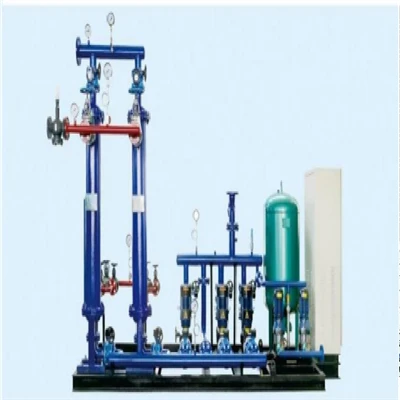
The thing is, AHUs don’t just work on luck. Every part of their performance can be measured, and those measurements are the difference between a unit that’s just running and one that’s running right. Today, I’m breaking down the actual performance indicators I track every week for my own AHU installations—stuff I don’t hide from customers, because transparency is how we build trust (and avoid those 2 a.m. emergency calls).
First up, let’s talk about something basic but make-or-break: air flow rate. This is just how much air the unit moves in a set amount of time, usually measured in cubic feet per minute (CFM) or cubic meters per hour (CMH). It’s not just a number on a label, either. If you’re in a retail space, that number needs to be high enough to keep stockrooms from smelling like old boxed inventory. If you’re in a hospital? You need precise CFM to prevent cross-contamination between patient rooms. Here’s the catch: a lot of sketchy AHU suppliers will overpromise CFM just to win a bid, then the unit underperforms once installed. How do we (and my customers) check? We use something called an anemometer to measure air speed at the unit’s outlets, then calculate CFM using the duct size. Last month, I had a customer call me panicking because their new unit only put out 1,200 CFM instead of the agreed 1,800—turns out the ductwork was too small, not the unit’s fault, but that’s why we check flow after installation, not before.
Next, static pressure. This is the hidden enemy of every AHU, and it’s the reason I spend so much time educating customers about duct design. Static pressure is the force the air has to push through to get from the AHU, through the ducts, filters, coils, and vents, and back into the unit. It’s measured in inches of water gauge (in wg) or pascals (Pa). Think of it like trying to blow a balloon through a narrow garden hose vs. a wide one—narrow hose = higher resistance = higher static pressure. If static pressure is too high, the AHU’s fan has to work way harder, wasting energy, overheating, and wearing out parts way faster. I’ve seen units fail in 2 years because of unaddressed high static pressure, vs. units that last 15+ when pressure is kept within the manufacturer’s recommended range. We check this with a digital manometer, and if it’s too high? Sometimes it’s as simple as changing a dirty filter or balancing the dampers in the ducts.
Then there’s thermal performance—aka how well the unit heats or cools the air it’s moving. For most AHUs, this is measured by air temperature delta, or the difference between the air going into the unit and the air coming out. For cooling, you want a delta of around 15-20°F (8-11°C) depending on the load, and for heating, it’s usually 20-25°F (11-14°C). If the delta is too low? Your unit is either undersized, or there’s a problem with the coil (like a leak or dirty coils blocking airflow). Last winter, a small office client of mine had their AHU heating rooms unevenly—after checking, we found the hot water coil was half clogged with rust from the building’s old pipes, so the air couldn’t pick up heat properly. Fixing that brought the delta up from 5°F to 22°F, and their utility bill dropped 18% in a month. Thermal performance also ties into how consistent the air temperature is, not just the delta—no one wants a room that’s 68°F in the morning and 78°F by noon, right? That’s where the temperature control loop (sensors and controls) comes into play.
Air quality is another big one, especially post-pandemic, when customers care more than ever about breathing clean air. An AHU’s indoor air quality (IAQ) performance is measured by a few key metrics: filter efficiency, particulate matter (PM) removal, and CO2 levels. Filters are rated by MERV (Minimum Efficiency Reporting Value) numbers—most commercial AHUs use MERV 8 to MERV 13. MERV 13 removes 90% of particles as small as 1 micron, which is enough for most offices, but hospitals might need MERV 14 or higher. We always explain that higher MERV filters mean better air, but they can add a tiny bit to static pressure (which is why regular filter changes are non-negotiable). CO2 levels are measured with sensors too—if levels stay above 1,000 parts per million (ppm) for too long, that means the unit isn’t bringing in enough outdoor air, leading to foggy conference rooms and tired employees. A simple fix sometimes, like adjusting the outdoor air damper, but sometimes it means upgrading the AHU’s ventilation capacity.
Energy efficiency is probably the indicator my customers ask about most, and for good reason—utility bills are a huge ongoing cost. The main metric here is the Seasonal Energy Efficiency Ratio (SEER) for cooling units, or the Heating Seasonal Performance Factor (HSPF) for heating units, but for full AHUs, we also use the Energy Efficiency Ratio (EER) and the Integrated Part Load Value (IPLV). Wait, let’s keep that simple: SEER is how efficient the unit is over an entire cooling season, not just at peak load. A unit with a SEER of 16 is way more efficient than one with SEER 10, even if the upfront cost is a bit higher. I always tell customers, the $2,000 cheaper unit now will cost you $5,000 more in energy over 10 years. We also look at fan power, because that’s often the biggest energy drain in an AHU. Variable speed fans (vs. constant speed) use way less energy when the load is low—like at night or on weekends when only a small space needs conditioning.
Wait, I can’t forget about fan power and motor performance, that’s a big one that’s easy to overlook. The motor that drives the AHU fan should be energy-efficient, usually an ECM (Electronically Commutated Motor) vs. a standard AC motor. ECM motors use 30-50% less energy because they adjust their speed based on demand, not running at full blast 24/7. We measure motor current and power input to make sure it’s not drawing more electricity than it should, which would mean the motor is failing or the fan is overworked. A friend in the industry once told me a horror story: a customer had an AHU motor that was drawing 2x the rated current, and they didn’t notice for 6 months—cost them $12,000 in extra energy bills. Ouch.
There’s also something called airflow uniformity, which is about how evenly air is distributed through the unit’s components, especially the cooling and heating coils. If air is unevenly spread, part of the coil will be unused, making the unit less efficient. You can check this with a traverse test, where you take air speed readings at multiple points across the duct. Last year, I installed a unit for a warehouse that had uneven airflow because of a bad duct transition from the AHU to the main duct—we added a flow straightener, and the uniformity went from 65% to 92%, cutting their cooling costs by 12%.
Now, let’s be real—AHU performance isn’t just about numbers on a gauge. It’s about how those numbers translate to real life for your team: no more complaining about cold spots in the winter, no more stuffy offices in the summer, no more surprise breakdowns that close your business for a day. As an AHU supplier, I don’t just sell you a unit and walk away. We do a full performance test after installation to make sure all those indicators hit the agreed numbers, and we offer quarterly check-ins to keep everything on track.
Here’s the thing: if you’re running a business, whether it’s an office, a retail store, a hospital, or a warehouse, your AHU is one of those behind-the-scenes systems that keeps things running smoothly. But only if it’s performing right. If your current unit is costing too much to run, making spaces uncomfortable, or giving you headaches with maintenance, we can help. We work with businesses of all sizes, from small local shops to large industrial facilities, to size, install, and maintain AHUs that hit all those performance marks. No confusing jargon, no hidden fees, just a unit that works as hard as you do.
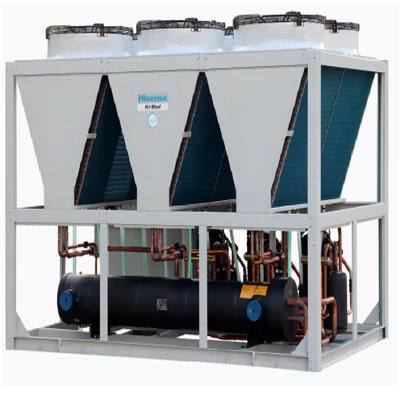
If you want to chat about your current AHU, get a custom quote, or just ask more about performance indicators, don’t hesitate to reach out. We’re here to help you figure out what your space actually needs, not just sell you the biggest, most expensive unit on the market.
Commercial Dehumidifier References
ASHRAE Handbook: HVAC Systems and Equipment
Air Movement and Control Association (AMCA) Standard 99-16
National Air Duct Cleaning Association (NADCA) ACR Standard 2021
U.S. Department of Energy: Energy Efficiency and Renewable Energy Building Technologies Office
Hangzhou Dayu HVAC Engineering Co., Ltd.
As one of the most professional air handling unit manufacturers and suppliers in China, we have world-leading production equipment and strong manufacturing capabilities. If you’re going to buy customized air handling unit made in China, welcome to get quotation from our factory. For price consultation, contact us.
Address: Room 1004, Building 1, Xicheng Business Tower, Xihu District, Hangzhou City, Zhejiang Province, China
E-mail: info@hi-hvac.com
WebSite: https://www.hi-hvac.com/
